
Every September, the same thing happens. The basil starts looking stressed. The outdoor rosemary that did so well all summer is getting leggy and the nights are getting cold. You start Googling “how to bring herbs inside for winter” — and then you discover what that actually involves.
This post is the honest version of that guide. It covers the three real challenges of moving outdoor plants indoors, what actually happens when most people try it, and why starting fresh on an indoor farm is almost always a better path than saving struggling outdoor plants.
If you’ve already decided to try bringing plants inside, there’s a guide for that at the end. But read the challenges section first.
The Three Real Challenges of Moving Plants Indoors
Challenge 1: Light Reduction
Outdoor plants in summer are receiving 8–10 hours of direct sunlight per day. A south-facing window in September provides roughly 4–6 hours of direct light — already half of what outdoor plants were getting. By November, that same window drops to 2–4 hours as the sun sits lower in the sky, days shorten, and cloud cover increases.
The result: plants that were lush and productive outdoors become leggy, pale, and less productive within 2–3 weeks of coming inside. This isn’t failure on your part — it’s physics. The indoor light environment in fall and winter simply cannot match what outdoor summer growing provided.
Plants grown from seed on a purpose-built indoor farm with its own lighting never experience this shock because they adapted to indoor conditions from germination.
Challenge 2: Temperature and Humidity Shock from HVAC
Outdoor plants in late summer live in high humidity (40–70%), stable temperatures, and naturally circulating air. When you bring them inside in fall, they enter the HVAC environment: dry air (20–35% relative humidity in heated homes), dramatic temperature cycling, and stagnant indoor air.
Basil is particularly vulnerable — a tropical plant that evolved in warm, humid conditions, it often drops leaves within a week of coming inside into a dry, heated space. Rosemary commonly develops powdery mildew when airflow drops.
Challenge 3: Spider Mites (and Pest Migration)
Spider mites thrive in dry, warm, indoor conditions — precisely the conditions of a heated home in fall and winter. Any outdoor plant you bring inside is potentially carrying mite eggs or young mites that were dormant or present in low numbers outdoors (where natural predators kept them in check). Once inside in dry heated air, spider mite populations can double every 3–5 days.
The first sign is usually stippled, dusty-looking leaves. By the time you notice webbing between stems, the infestation is already significant. Spider mites spread to other houseplants and require repeated treatment with Neem Oil Spray over several weeks. Our detailed guide on common bugs in indoor plants covers identification and treatment of the most common indoor growing pests.
What Actually Happens When You Bring Outdoor Plants Inside
The realistic scenario for most outdoor-to-indoor transitions:
Week 1: Plants come inside. Some immediate leaf drop from basil. Other plants look fine.
Week 2: Light stress becomes visible — plants start reaching toward the light source, new leaves are smaller and paler. Some yellowing on lower leaves.
Week 3–4: The divide appears. Hardy herbs (thyme, oregano, rosemary) may stabilize and slowly adapt. Sensitive plants (basil) continue declining or die outright. Spider mites, if present, are now visible and spreading.
Outcome at 6 weeks: A partial success at best. Some herbs may be producing small harvests. Others are dead or dying. The plants that survived are producing at maybe 20–40% of their outdoor productivity.
The Alternative: Start Fresh and Thrive
Here’s the comparison that matters:
Option A: Bring stressed, root-bound, potentially pest-carrying outdoor plants inside. Manage light deficiency, humidity shock, and spider mites. Hope some of them adapt. Get partial harvests at 20–40% of outdoor productivity.
Option B: Start fresh seeds on an indoor farm with controlled lighting, hydroponic nutrient delivery, and a clean growing environment. Have your first harvest in 3–4 weeks (basil, chives) to 6–8 weeks (sage, rosemary). Produce at peak productivity from the first harvest onward.
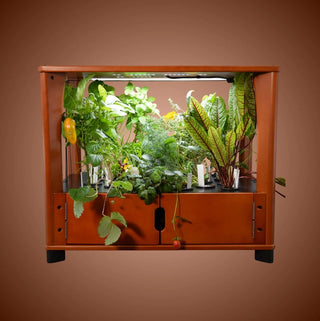
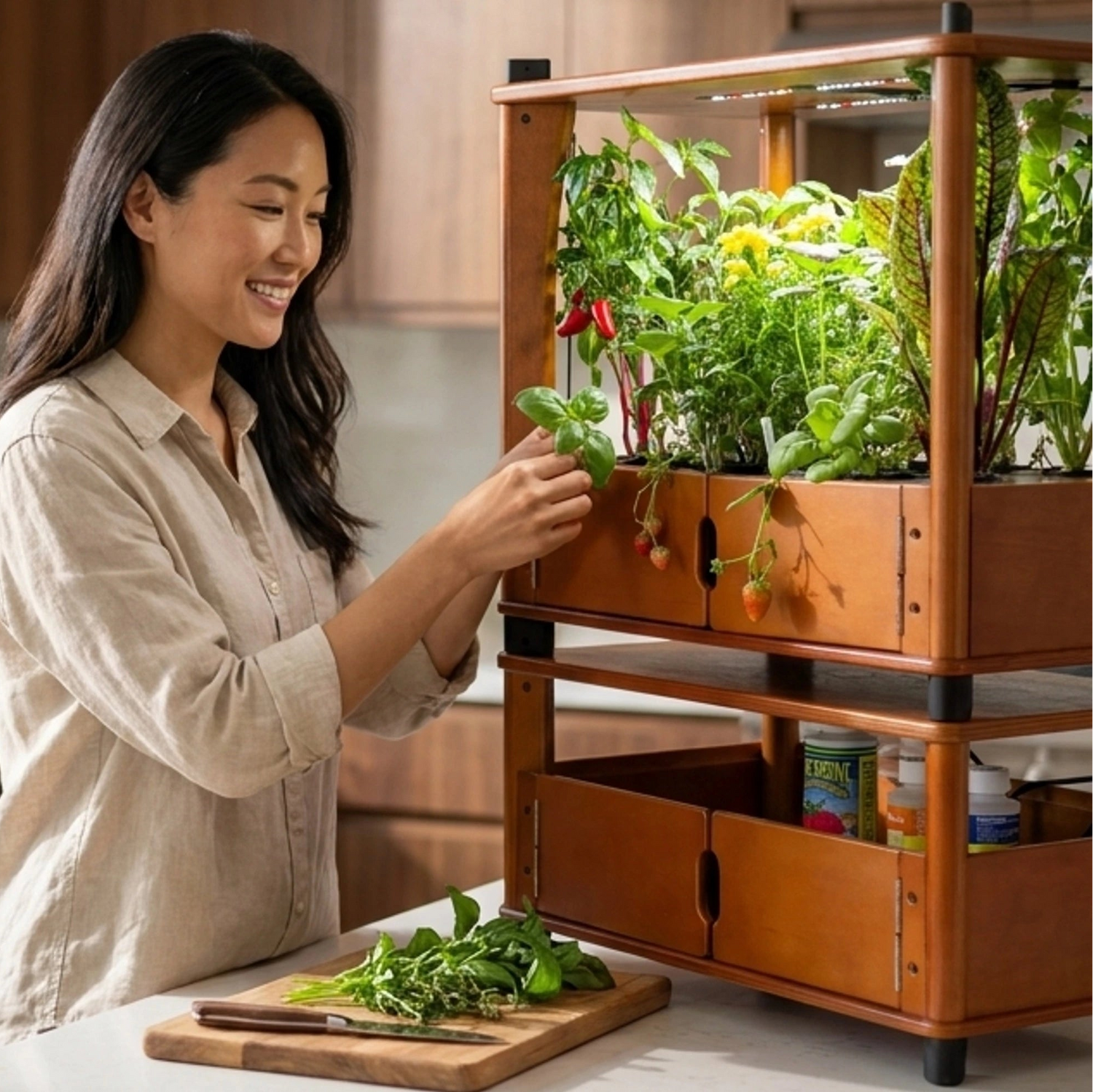
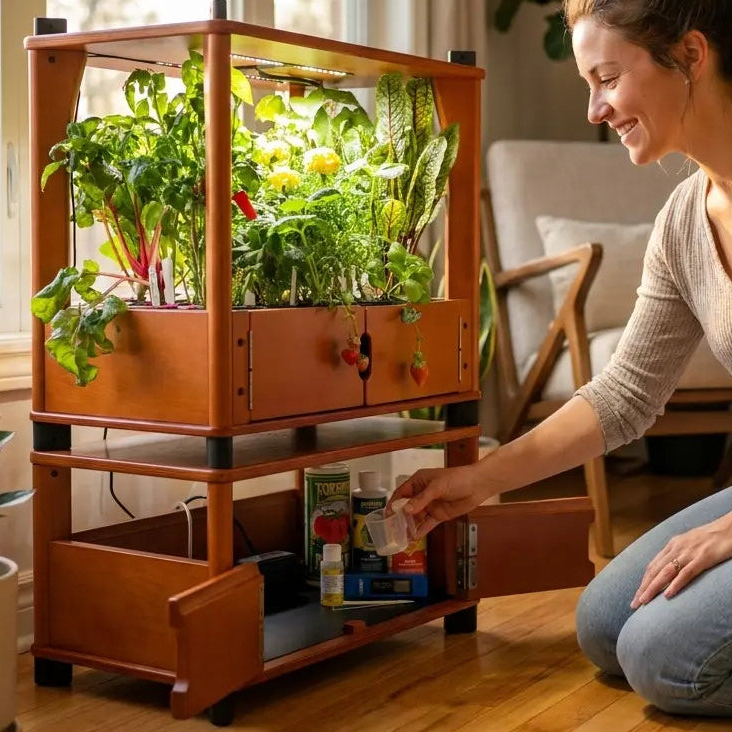
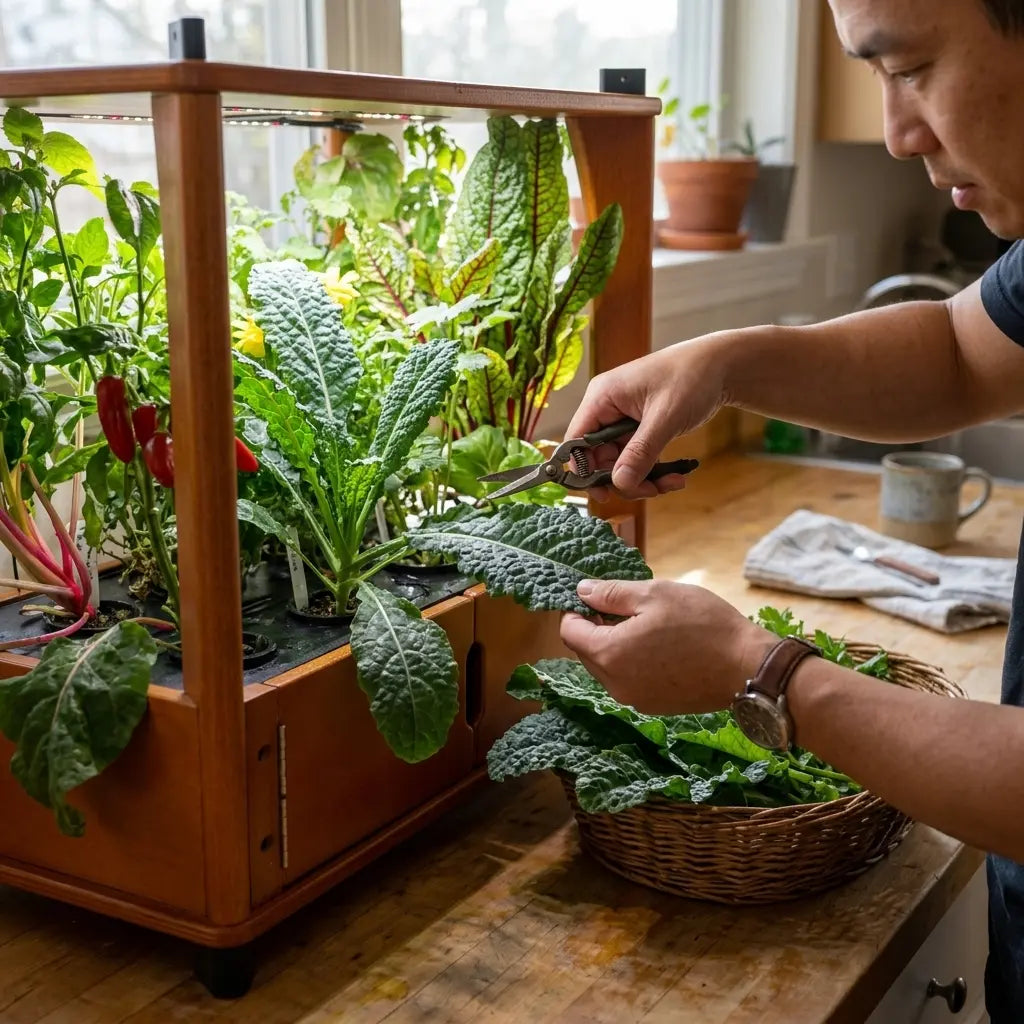
The Aquager Hydroponic Home Farm is a clean-break indoor growing system. Seeds germinated on the farm have never been outdoors, so there’s no light shock, no HVAC transition, and no hitchhiking spider mites. The growing mediums are organic coco coir pucks — sterile, fresh, with no resident fungal or pest populations from outdoor soil.
A stressed outdoor basil brought inside in September will, at best, produce occasional small harvests through winter while requiring significant attention. A basil started from seed on the farm in September will be at peak production by late October and continue producing through the entire winter with minimal maintenance.
What to Grow on the Farm This Fall
Fast producers (3–4 weeks):
- Basil Genovese — the Italian kitchen essential
- Chives — on everything from baked potatoes to scrambled eggs
Medium producers (4–6 weeks):
- Thyme — for roasts, soups, and compound butter
- Parsley — the finishing herb for fall cooking
- Oregano — pasta, braises, marinades
Slow but essential (6–8 weeks):
- Sage — for Thanksgiving stuffing and fall butter sauces
- Rosemary — for holiday roasts and Christmas bread
For a complete guide on which herbs produce the highest yields on the farm, see our guide to growing herbs indoors year-round.
If You Still Want to Try Bringing Plants Inside
What’s actually worth saving. Perennial herbs with established root systems have the best odds: rosemary, thyme, sage, and oregano can survive the transition with adequate light. Annual herbs (basil, cilantro, dill) rarely overwinter successfully — better started fresh from seed.
Inspect before you bring in anything. Look under every leaf for webbing, stippling, or moving dots. Check the soil surface for fungus gnats. If you see either, treat with neem oil spray before bringing the plant inside — do this outdoors and wait 48 hours.
Give them the best light you have. South-facing window first. Supplement with an LED grow light if available. Without adequate light, the transition will fail regardless of what else you do.
Acclimate gradually. Don’t move outdoor plants directly from full sun into a dim indoor space in one day. Set them in a partially shaded outdoor location for a week before bringing them fully inside.
Water less. Plants growing in lower light photosynthesize less and need less water. Continuing to water at outdoor frequency leads to root rot. Check the soil moisture before watering; let it dry out slightly between cycles.
Have neem oil ready. Spider mites will often appear within 2–4 weeks regardless of your inspection. Keep neem oil spray on hand and treat at the first sign.
Frequently Asked Questions
Can I overwinter basil indoors?
Technically yes, but practically it rarely works well without a dedicated grow light. Basil is a tropical plant that struggles with dry indoor heat and low light even on the best south-facing window. Most experienced indoor growers start basil from fresh seed each season rather than attempting to overwinter it.
When is the right time to bring plants inside?
Before the first frost, but ideally before nighttime temperatures consistently drop below 50°F. Herb plants that experience repeated cold nights become stressed before you even attempt to bring them inside, making the indoor transition harder.
What’s the difference between a grow light and the Aquager farm’s built-in light?
A standalone grow light is an afterthought solution to a light deficiency problem. The Aquager farm is designed from the ground up to provide the right spectrum, intensity, and duration for herbs. Plants started on the farm are adapted to indoor lighting from seed, which produces significantly better results than transitioning outdoor plants to artificial supplemental light.
Do I need to repot outdoor plants before bringing them inside?
If the plant is rootbound, repot into the next size up. Rootbound plants struggle to take up water and nutrients, which compounds the stress of the indoor transition. Fresh organic grow mediums at this stage can help reset the growing environment without the pest pressure from old outdoor soil.
Final Thoughts
Moving outdoor plants indoors for fall is possible, but the realistic outcome is usually a project: managing light deficiency, pest pressure, and the general stress of a plant in decline. For gardeners who want fresh herbs through fall and winter — not a project — starting fresh on an indoor farm produces better results with less effort.
The Aquager Hydroponic Home Farm with organic grow mediums, nutrients, and pH kit gives you a complete system that produces peak-quality herbs through winter. Start this week and you’ll have your first harvests before the outdoor season fully ends.
For the easiest herbs to start on the farm, our guide to the easiest herbs to grow indoors covers which varieties to prioritize.
Author: Aquager | Published: June 4, 2026 | Updated: June 4, 2026












0 comments