
Most people assume indoor growing is a spring and summer activity — that the garden shuts down when the temperature drops, and you pick it back up in April. This assumption is wrong, and it costs growers four months of winter vegetables and fresh herbs every year.
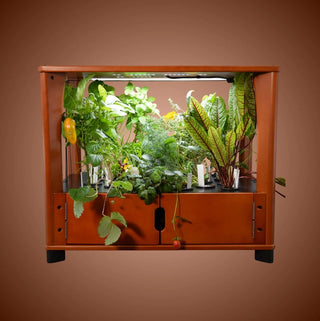
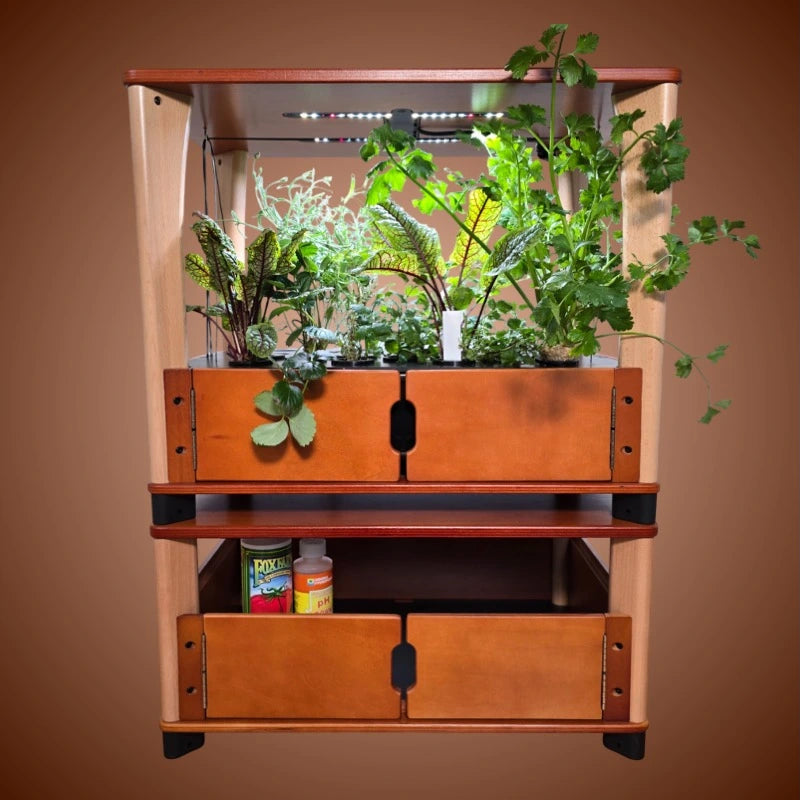
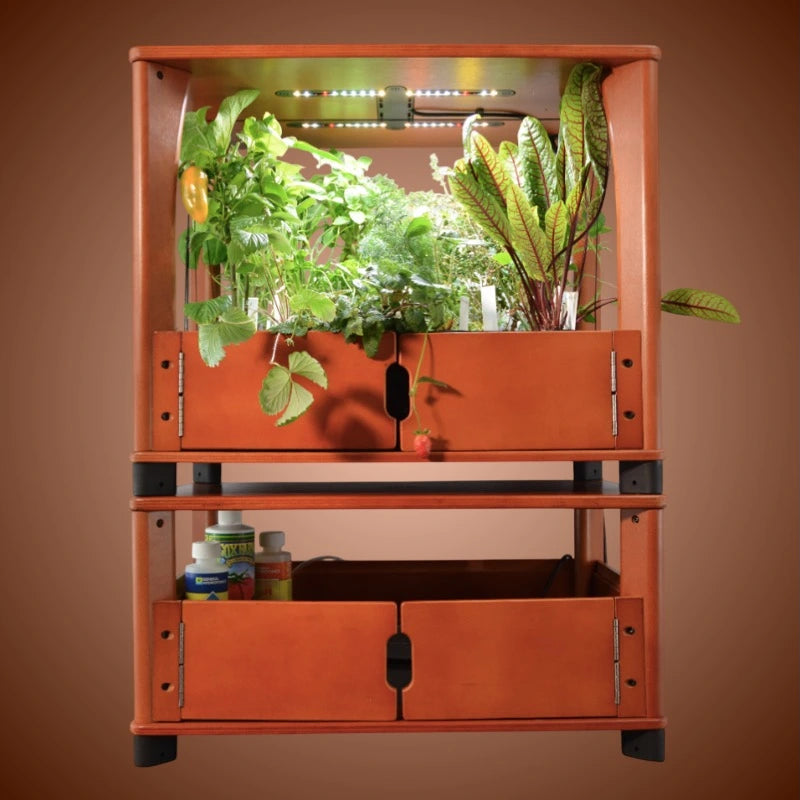
The Aquager farm is climate-independent. It doesn't care what's happening outside. The LED grow light replaces sunlight, the reservoir maintains consistent water temperature, and the nutrients feed the roots directly — no soil, no weather, no season. November through February is some of the best growing you'll do all year.
This is the complete winter growing guide: which crops thrive in those four months, what to expect from each one, and how to time your plantings for continuous harvests from the first cold night through the last frost.
Why Winter Is Actually Ideal for Indoor Growing
Outdoor gardening in winter means fighting conditions: frozen soil, insufficient light, cold damage, and the constant risk of a hard frost destroying what you've planted. Indoor growing inverts every one of those challenges into advantages.
No pests. Aphids, fungus gnats, and spider mites follow the outdoor growing season. In winter, pest pressure on indoor farms drops to near zero. You can grow through most of the cold months without neem oil spray or sticky traps.
Stable ambient temperature. Home heating keeps indoor temperatures in the 65–72°F range that most herbs and greens prefer. No hardening off, no frost protection, no heating mats needed.
Short days don't matter. The 9 hours of natural daylight in December at northern latitudes have no effect on plants growing under the farm's LED system. The light timer runs 16 hours on / 8 hours off regardless of whether it's cloudy or dark outside. Planting seeds in winter indoors is genuinely no different from planting in June.
The farm's warmth benefits growth. The LED lights and water pump generate gentle ambient heat that keeps the root zone at optimal temperature. In winter, this warmth helps rather than stresses the plants — the farm sits comfortably in a cool room while the growing zone stays ideal.
Winter Herbs: What Grows Best November Through February
Herbs are the strongest category for winter indoor growing. Most prefer cooler ambient temperatures and lower humidity than peak summer — conditions that are naturally present in a heated home in winter.
Basil
Basil grows year-round in the Aquager farm with no seasonal adjustment needed. The Genovese Aroma 2 pod germinates in 5–7 days and reaches first harvest in 3–4 weeks. In winter, basil's growth rate actually steadies — without the intense summer heat that can trigger premature bolting, plants stay in the leafy vegetative stage longer, giving you more harvest cycles before they flower. Start basil at any point in November or December for continuous production through February.
Thyme
Thyme is one of the most natural winter herbs to grow: it's a cold-season perennial outdoors, which means it's genuinely in its element during the colder months. In the farm it takes 5–7 weeks from seed to first harvest. Start thyme in early November and it's ready for holiday cooking by mid-December. A single pod provides enough fresh thyme for weekly soups, roasted vegetables, and winter braises through the entire cold season.
Rosemary
Rosemary takes 6–8 weeks from seed, making it the longest-lead herb in the winter lineup — but worth the patience. Winter rosemary has the same aromatic intensity that takes months to develop in an outdoor shrub. Start a pod in late October or early November and you'll have fresh sprigs for December roasts and holiday meals. Once established, the plant yields weekly without slowing its growth.
Chives
Chives are one of the most productive winter herbs in the farm. They germinate quickly, grow fast, and regrow reliably after every cut. In winter they're the ideal finishing herb — bright and fresh on eggs, soups, baked potatoes, and anything that needs a last-minute green element. Ready in 3–4 weeks, continuously harvested thereafter.
Lemon Balm
Lemon Balm (from the mint family) grows vigorously in the farm year-round and is particularly useful in winter for herb teas, cold-infused water, and winter salad dressings. It carries the same cool, clean character as mint and grows with equal ease — the most accessible mint-family herb available as an Aquager hydroponic pod.
Winter Vegetables and Cold-Weather Greens
Leafy greens are cold-season crops by nature — they prefer the cooler ambient temperatures of November through February. In an indoor farm with grow lights, they reach their full potential year-round.
Kale (Frisé Rouge)
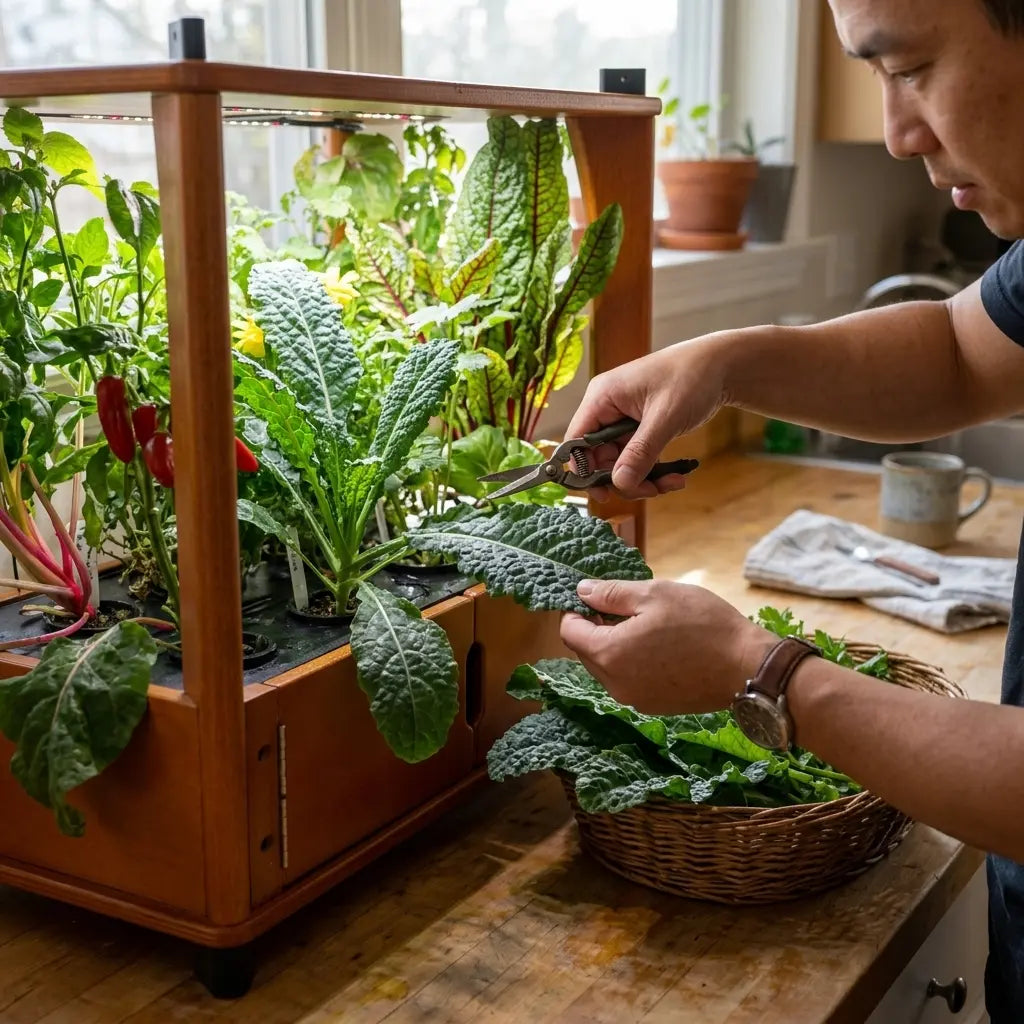
The Frisé Rouge kale pod is one of the standout winter crops in the farm: dark, curly leaves ready in 4–5 weeks, with a mild flavor that's best harvested young. Start kale in November for December holiday meals — it goes in salads, smoothies, sautées, and grain bowls alike. In the farm, kale can be harvested as baby leaves (sweeter, more tender) or allowed to reach full size. Either way, it's one of the most productive plants per pod slot over a winter season.
Arugula
Arugula is the fastest leafy green in the catalog: ready in 3–4 weeks, with a peppery bite that pairs naturally with winter salads, pizzas, and pasta. It's best harvested young when leaves are 2–3 inches long and at peak flavor. Consistent small harvests beat waiting for a large cut — older arugula grows bitter. Start arugula continuously through the winter for a reliable peppery green every week.
Rainbow Chard
Rainbow Chard adds striking color to the winter farm — bright pink, yellow, and orange stems contrast beautifully against a gray season. Ready in 4–5 weeks, chard is versatile: stems and leaves can be sautéed together, used in grain bowls, or eaten raw in salads when young. It handles a range of light levels and temperatures without complaint, making it one of the most forgiving cold-weather crops.
Spinach and Bok Choy
For variety beyond the core winter lineup, Spinach (Space variety) and Bok Choy (Little Shanghai) are both natural cold-weather crops that grow beautifully in the farm. Spinach is ready in 3–4 weeks for baby leaf harvests; bok choy in 4–5 weeks and particularly well-suited to stir-fries and winter soups.
Microgreens: Instant Winter Harvests While You Wait
Microgreens are the winter farm's secret weapon. While herbs and vegetables take 3–8 weeks from seed to harvest, microgreens are ready in 7–14 days — giving you fresh food from the farm while everything else is still establishing.
The best microgreens for winter are the ones with the most culinary versatility: Radish Confetti Mix (ready in 5–7 days, spicy and vibrant), Cilantro microgreens (7–10 days, bright and peppery), and Broccoli microgreens (10–14 days, mild and nutrient-dense). Run them in continuous 10-day cycles and there's always something ready to harvest.
The practical approach: start a new microgreens tray every 10 days throughout winter. By December, you'll have a rotation where something is always 2–3 days from harvest — a standing fresh ingredient that becomes a kitchen staple.
November Through February: A Winter Growing Calendar
Here's how to time winter garden vegetables so the farm stays continuously productive from first frost through late February.
Early November: Start your longest-lead crops first. Rosemary (6–8 weeks) planted in early November is ready by late December — in time for holiday roasts and special meals. Start thyme simultaneously (5–7 weeks, ready by mid-December). Kale and chard can go in at the same time; both are ready in 4–5 weeks for Thanksgiving and early December meals.
Mid-November: Add basil and chives — both ready in 3–4 weeks, landing in mid-December. Start your first microgreens tray. It will be ready in 7–10 days, giving you fresh greens for your Thanksgiving table while the herbs are still germinating.
December: The farm reaches full winter production. Rosemary and thyme are in first harvest. Basil is lush and producing. Chives regrow continuously after each cut. Start a second round of basil for January and February. Continue microgreens cycles. The farm is now providing fresh herbs for holiday cooking: rosemary for roasts, thyme for soups, basil for pasta, chives for everything.
January: The New Year fresh-start moment. Arugula planted in early January is ready by the end of the month. Start kale and chard for February harvests. Lemon balm takes 4–5 weeks from a January start, giving you fresh mint-family herb for February teas and infused water. Our guide to growing herbs indoors year-round covers the full beyond-winter calendar for what to plant as February ends and spring approaches.
February: The bridge to spring. The farm has been producing continuously for four months. Plants started in January are in full harvest. Start a fresh round of rosemary and thyme now and they'll be established by April — giving you a head start on the spring herb shelf before outdoor growing resumes.
What's Different About Winter Growing
The farm doesn't change season to season, but a few practical differences are worth knowing before your first cold-weather start.
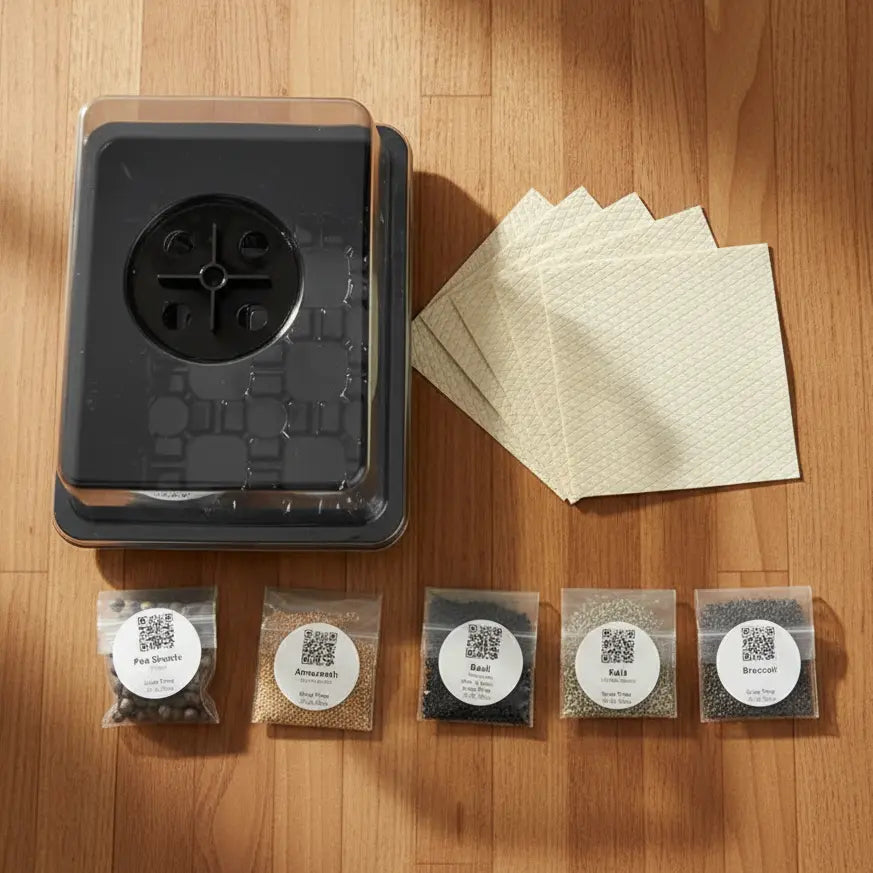
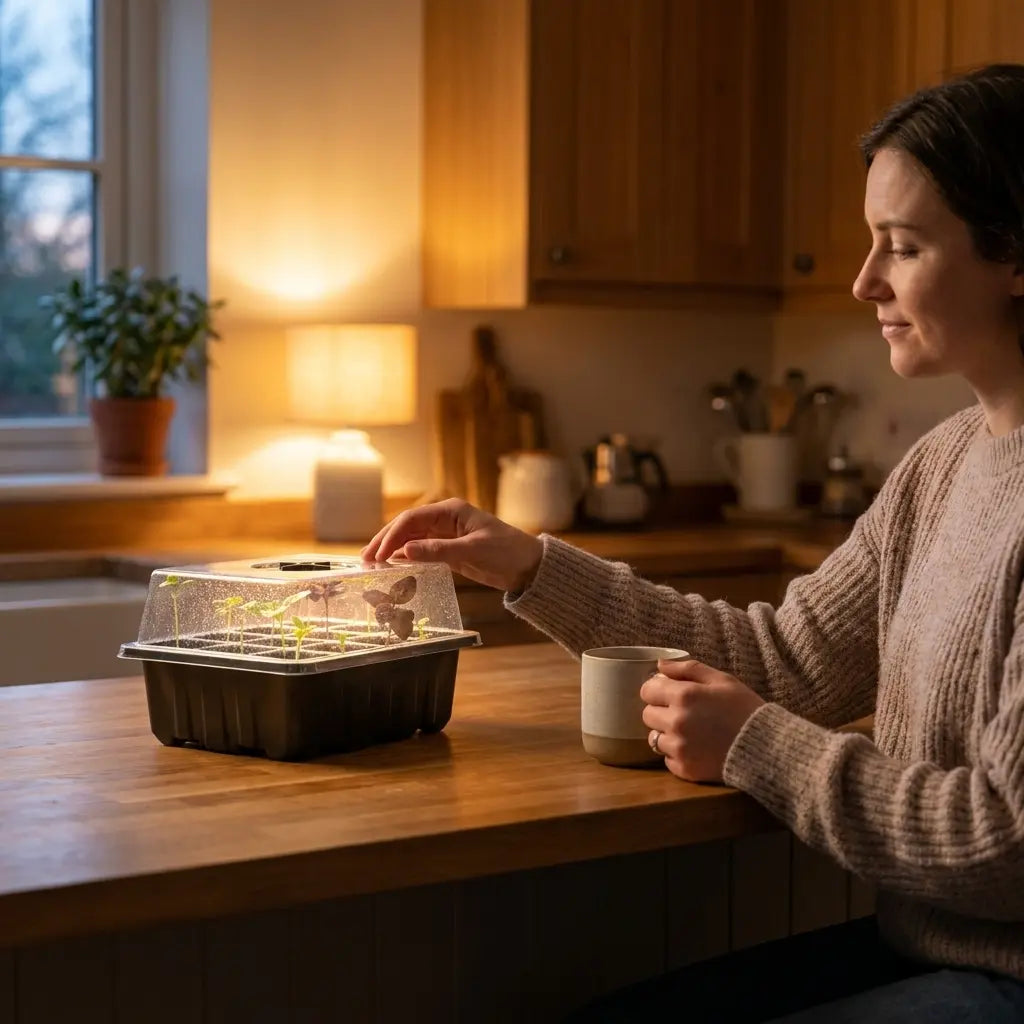
Lower ambient humidity. Heated homes in winter are drier than the 60–70% humidity herbs prefer in summer. This isn't a problem for established plants, but may slightly slow germination in week one. The fix: keep the pod cover on until germination is complete to trap moisture at the seed level.
Cooler overnight temperatures. If you lower the thermostat overnight and the farm sits in a room that drops below 60°F, some tropical herbs — especially basil — may grow more slowly. Position the farm where nighttime temperature stays above 65°F. Thyme, rosemary, kale, arugula, and chard are indifferent to cooler temperatures and actually prefer them.
No change to your light schedule. This is the key point: the grow light operates on a timer set independently of natural daylight. Plants in the farm don't experience shorter winter days. They get exactly the same 16 hours of grow light in December as they do in June. Season is irrelevant to the light cycle.
Frequently Asked Questions
Can I really grow basil in December?
Yes — basil in the Aquager farm has no awareness that it's December. The grow light provides the long-day conditions basil requires, the water temperature stays consistent, and nutrients are delivered directly to the roots. Our complete guide to growing basil indoors covers the technique in full, including what to do when the plant starts to bolt in warmer months — a problem that's less common in the cooler ambient temperatures of winter.
Do I need to change my farm maintenance routine in winter?
Very little. Keep the farm away from cold drafts near external windows or frequently opened doors. Check the reservoir slightly more often, as heated indoor air is drier and plants may drink a little faster. Otherwise the same maintenance rhythm applies year-round: top up the reservoir every 2–3 days, add nutrients with each top-up, and do a full water change every 2–3 weeks.
What's the easiest winter starting lineup for a first-time grower?
Start with basil, chives, and a microgreens tray. Basil gives you a visible, satisfying result in 3–4 weeks. Chives are nearly impossible to fail. Microgreens give you something to harvest in 7–10 days while the herbs are developing. This combination covers the full spectrum from instant reward to long-term production. Our guide to the easiest herbs to grow indoors covers what to expect from each variety at every stage of development.
Which crops take longest to reach first harvest in winter?
Rosemary is the longest-lead crop at 6–8 weeks from seed. If you want rosemary for holiday cooking, start it in the first two weeks of November. Thyme is second at 5–7 weeks, also worth starting early. Kale, chard, and arugula come in under 5 weeks. Basil and chives are ready in 3–4 weeks. Microgreens are ready in 7–14 days.
Is there anything I can't grow indoors in winter?
A small number of crops require cold stratification — a period of genuine cold to trigger germination — but none of those are relevant to a kitchen herb farm. Everything in the Aquager catalog grows as well in November as in May. The limiting factor is never the season; it's the grow light and nutrient delivery, both of which the farm handles automatically.
The Farm Doesn't Know What Season It Is
That's the fundamental argument. Outdoor vegetable gardens are at the mercy of temperature, daylight, soil condition, and weather. The Aquager farm operates on its own internal calendar — 16 hours of light, consistent nutrients, climate-controlled root zone — the same in November as it is in July.
The crops in this guide are not "cold weather vegetables" in the outdoor sense. They're year-round crops that happen to be excellent choices for November through February because of their flavor profiles, culinary uses, and growth rates. The Aquager system handles what winter makes tricky outdoors. You just harvest.
Author: Aquager · Published: June 7, 2026 · Updated: June 7, 2026











0 comments