
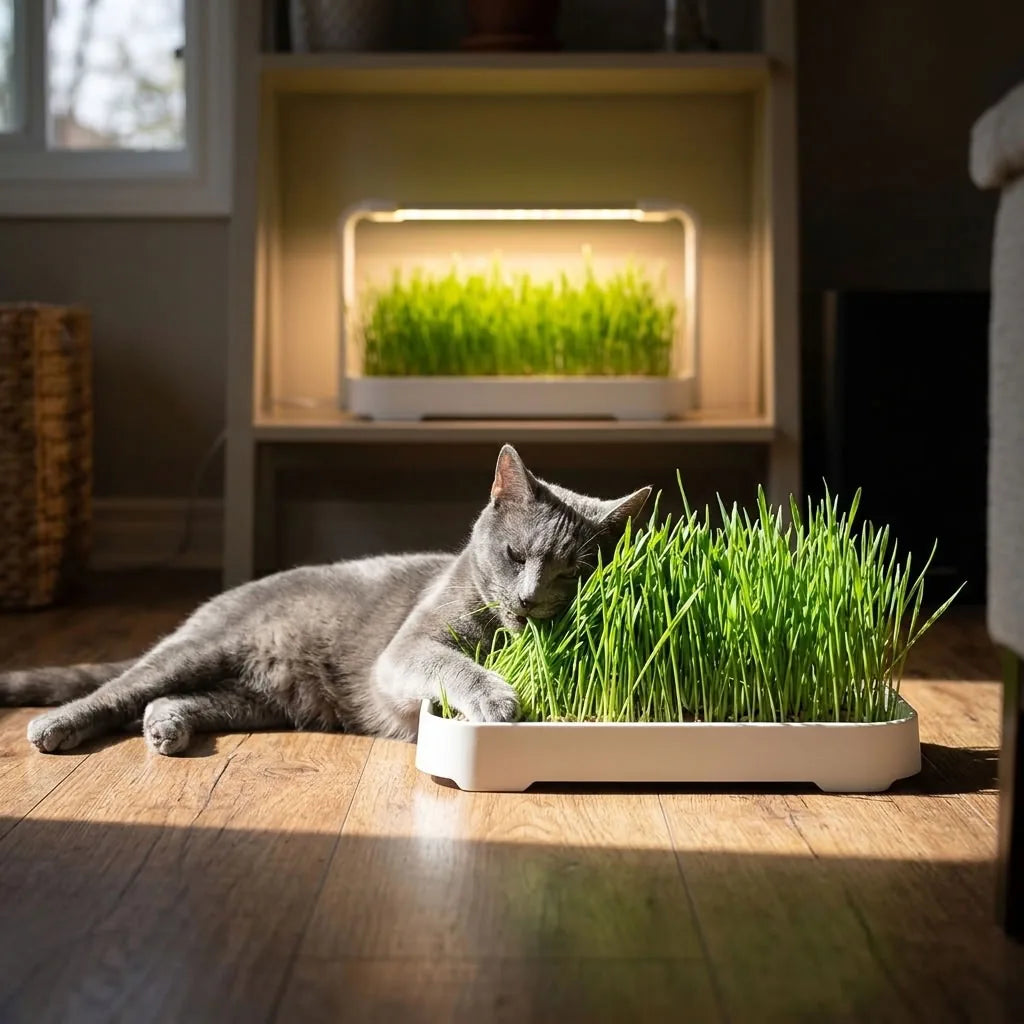
A cat eating plants is one of the most common complaints from cat owners. You find chewed leaves, a toppled pot and sometimes a puddle of vomit on the rug, and you wonder what you did wrong.
The short answer is nothing. A UC Davis survey of 1,021 cat owners found that 71% of cats had been seen eating plants at least 6 times. This guide explains why cats do it, how to keep them away from your plants, and what to give them to chew instead.
One note first: some common houseplants are dangerous to cats, so the fixes below start with protecting your cat, not just your plants.
Why Is My Cat Eating My Plants?
Cats eat plants because it is a common, mostly normal behavior. In the UC Davis survey, 71% of cats were seen eating plants at least 6 times, and only 11% were never seen doing it. The researchers describe plant eating as a common, mostly normal and instinctive behavior, not a sign that something is wrong with your cat.

Age matters. In the study, cats under 1 year old ate mostly plants other than grass, such as houseplant leaves, while older cats ate mostly grass. The authors raise the idea that the habit may help cats deal with intestinal parasites, but they did not test that directly. For the grass side of the story, read about why cats eat grass.
Does My Cat's Age Change What It Eats?
Yes. In the UC Davis study, cats under 1 year old ate mostly plants other than grass (69.1% of their plant eating), while cats 1 year and older ate mostly grass (between 52.5% and 62.8%). So a kitten that shreds your pothos may settle on grass as it grows up, and an adult cat that rarely touched plants may still try a new one.
This is useful when you plan the fixes. A young cat needs the leafy houseplants out of reach first, because that is what it goes for. An older cat is often just as happy with a patch of grass, so a tray of its own can solve most of the problem. Either way, the study relied on what owners reported, not on watching the cats directly, so treat the numbers as a guide, not a rule.
Is It Normal for a Cat to Eat Plants, or Is Something Wrong?
It is usually normal. Occasional plant chewing in an otherwise healthy, eating, playing cat is common behavior. Talk to your vet if your cat vomits often after eating plants, loses its appetite, seems tired, or suddenly starts chewing far more than before.
Vomiting is common, but it is not a reason to ignore the habit. About 27% of the cats in the study were reported to vomit frequently after eating plants. Your vet can tell you whether it points to a stomach problem.
Which Plants Are Dangerous If My Cat Chews Them?
Lilies, sago palm and oleander are the most serious, and many popular houseplants such as pothos, aloe and snake plant also cause problems. Our guide to plants toxic to cats lists them with the signs to watch for. If you think your cat ate one, call your vet or the ASPCA Animal Poison Control Center at (888) 426-4435 right away.
How Do I Keep My Cat Away From My Plants?
Use three layers: move or protect the plants, make the soil and leaves less appealing, and give your cat something better to chew. Deterrents alone only say no, so cats often return to the plants unless they have an alternative.
Should I Move My Plants Out of Reach?
Yes, and moving the dangerous ones comes first. Put toxic plants in a room your cat cannot enter, because cats jump and climb, so a high shelf is not out of reach. Hanging planters, plant stands and closed doors work better. For plants that stay in cat rooms, choose house plants safe for cats so a chewed leaf is not an emergency.
What Deterrents Work Without Harming My Cat?
Physical deterrents are the safest choice. They change how the pot feels, rather than how it smells, and they do not put anything on your cat or your plant that it could lick. These are the ones vets and pet care writers suggest most often.
- Cover the soil with gravel, decorative stones or pine cones, so your cat cannot dig.
- Lay aluminum foil over the soil, which many cats dislike walking on.
- Stick double-sided tape around the rim of the pot, because cats dislike the sticky feel on their paws.
- Use a mesh or wire cover over the soil, or a plant stand that is hard to climb.
These work best on cats that dig or sit in pots. They do less for a cat that wants to chew the leaves, since the leaves stay within reach.
Are Plant Sprays and Essential Oils Safe to Use?
Skip essential oil sprays. VCA animal hospitals list citrus, peppermint, pine and tea tree oil among the essential oils that are toxic to cats. A cat that licks its paws after brushing a sprayed leaf can swallow enough to get sick, so a plant spray that smells pleasant to you can be a risk to your cat.
This also applies to citrus peels, which some guides suggest. Citrus oil is on the VCA list, so we do not recommend them around cats. If you want to try a store-bought cat plant deterrent, check the label with your vet first.
How Do I Make a Room Cat-Friendly and Still Keep Plants?
Keep the plants that are safe for cats and move the rest. Our list of house plants safe for cats covers popular choices such as spider plants and orchids, so a nibble is not an emergency. Place them where your cat can reach them, and keep the risky ones behind a closed door or in a hanging planter.
It also helps to give your cat reasons to look elsewhere. Vet-reviewed guides suggest a mix of options that take the attention off the pots.
- A cat tree or shelf near a window, so your cat has a high place to watch the yard.
- A window perch, which gives your cat something to look at all day.
- Regular play with a wand toy or a ball, especially when your cat starts to eye the plants.
- A tray of fresh cat grass in the same room as the plants.
None of these replaces the others. Think of them as extra options that make the plants less interesting.
What Should I Do If My Cat Eats a Toxic Plant or Sprayed Leaves?
Call your vet or the ASPCA Animal Poison Control Center at (888) 426-4435 right away, and have the plant name or product label ready. The Pet Poison Helpline at 1-800-213-6680 is another option. Both may charge a consultation fee. Do not try to make your cat vomit unless a vet tells you to.
Watch for drooling, repeated vomiting, trouble breathing, wobbly walking or tremors, which are signs vets list after a cat is exposed to toxic essential oils. These signs can also follow a toxic plant, so do not wait to see if they pass. A photo of the plant or the product label helps the vet decide what to do next.
Keep that phone number somewhere easy to find, such as the fridge or your phone contacts. A few seconds saved at the start can matter more than anything you try at home.
How Do I Stop My Cat From Eating Plants for Good?
Give your cat a plant of its own to chew. Cats chew plants because the behavior is natural, so blocking it without an alternative rarely lasts. A tray of fresh cat grass gives that chewing a safe place to land, and it gives your cat a better option than your houseplant.
What Can My Cat Chew Instead of My Plants?
Fresh cat grass is the best answer, since grass is what most adult cats chew in the study. Growing a tray at home gives your cat its own plant, so the chewing has a safe place to go. The Cat Grass Growing Kit with LED Light makes that easy.
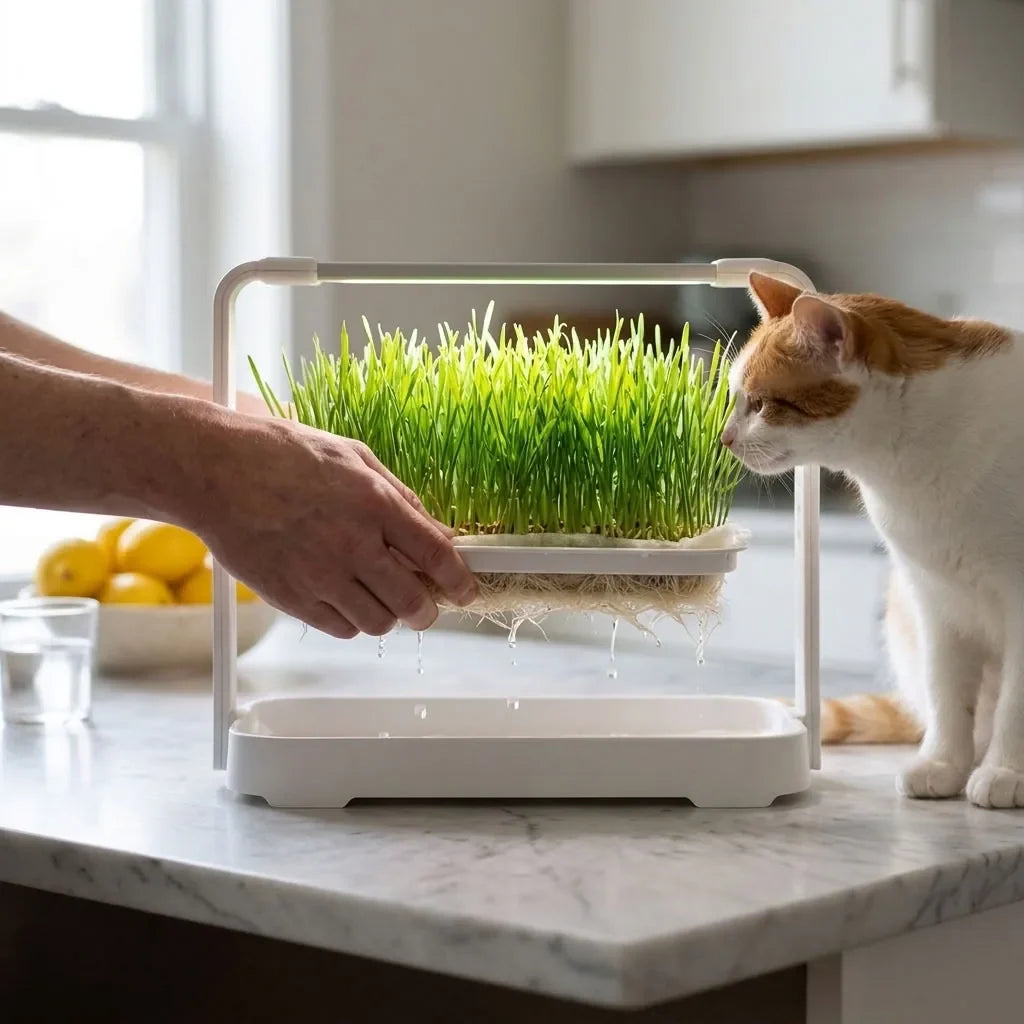
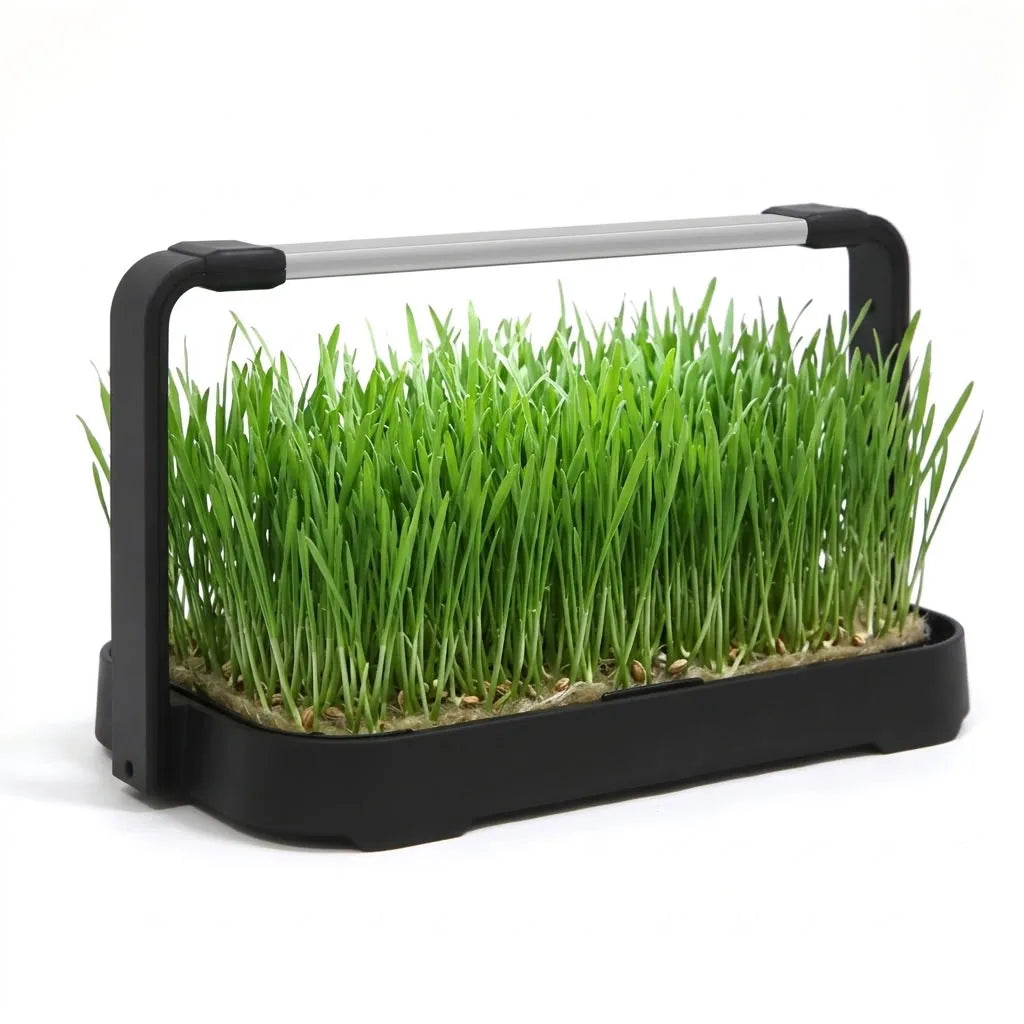
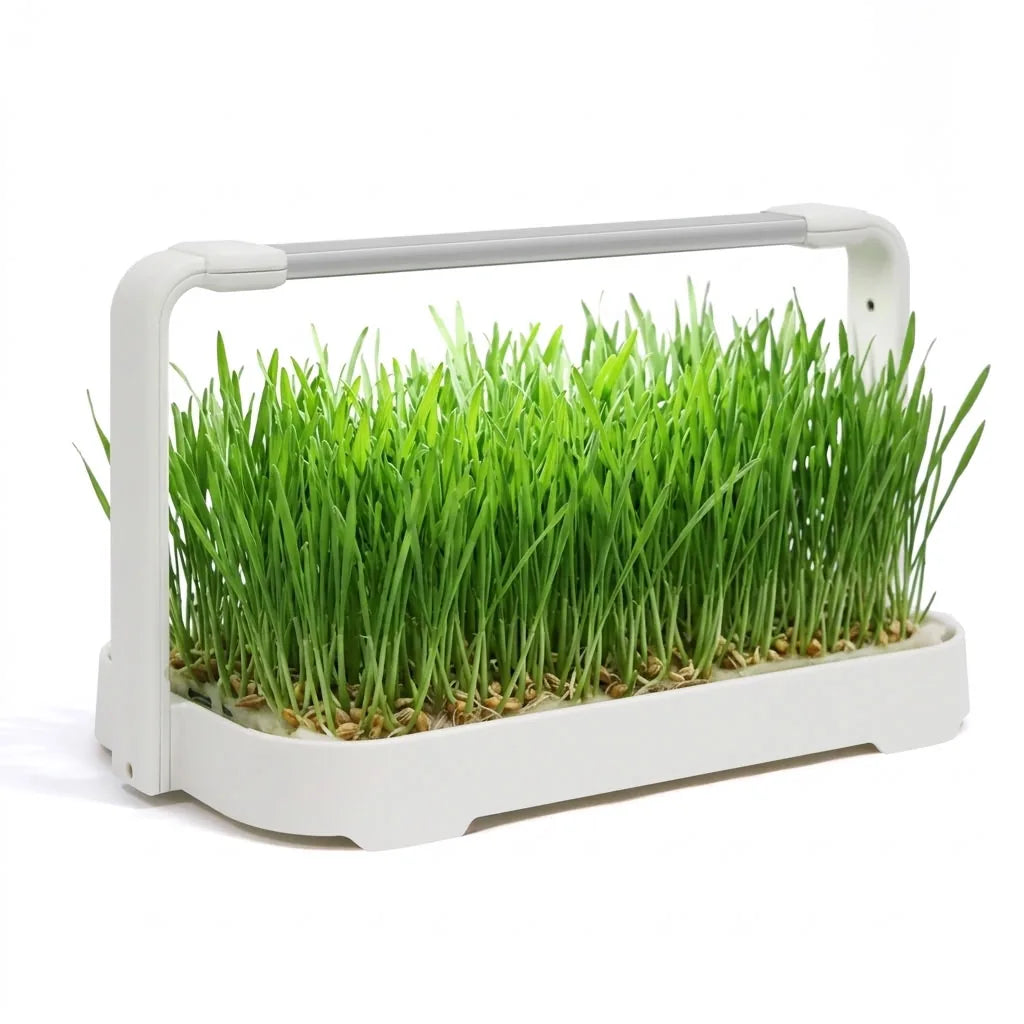
It grows a tray of wheatgrass in 7 to 12 days. It comes with a self-watering base, a built-in 10W LED on a timer, 2 packs of USDA-certified organic wheatgrass seed and 2 grow mats. There is no soil to spill and no window needed, so you can set the tray right next to the plant your cat keeps targeting.


How Do I Get My Cat to Use the Grass Instead of My Plants?
Place the tray where your cat already goes, such as near the favorite plant, the bed or the food bowl. Some cats need a day or two to investigate it. Keep the grass fresh and start a new tray before the old one yellows. To learn more about the grass itself, read about wheatgrass for cats and cat grass vs catnip.
What Should I Expect in the First Few Weeks?
Expect a short trial period. Some cats go straight to the grass, and others sniff it for a day or two. Meanwhile, keep the protections on your plants, since a new tray does not remove the old habit overnight. Once your cat chews the grass regularly, you can relax the barriers on the plants that are safe for cats.
Rotate fresh trays so there is always green grass to chew. With the self-watering base, the kit needs a refill of water now and then, and the built-in LED runs on a timer, so the tray keeps growing even in a room with little daylight. Start the next tray as the first one begins to yellow, and your cat always has a safe option nearby.
Play helps too. Vet-reviewed pet care guides also suggest cat trees, window perches and regular play to give cats something else to do. Cat grass and play together cover both the chewing and the energy.
What Else Do Cat Owners Ask About Cats Eating Plants?
Will my cat outgrow eating plants?
Not always, but the habit changes. In the UC Davis study, cats under 1 year old ate mostly plants other than grass, while older cats ate mostly grass. Most cats keep chewing plants for life, so a safe outlet works better than waiting.
Why does my cat vomit after eating plants?
About 27% of the cats in the UC Davis survey were reported to vomit frequently after eating plants. Plant material can irritate a cat's stomach. If your cat vomits often, loses its appetite or seems unwell, talk to your vet.
Will my cat leave my plants alone if I give it cat grass?
Many cats do, but there is no guarantee. Cat grass gives the chewing habit a safe outlet, and combining it with moving toxic plants and covering soil works best. Keep dangerous plants out of reach either way.
Is it safe to use citrus peels to keep my cat away from plants?
We do not recommend it. Citrus oil is on the VCA list of essential oils that are toxic to cats. Stones, foil, double-sided tape and moving the plant are safer ways to keep a cat away.
Should I punish my cat for chewing plants?
No. Chewing plants is a normal behavior, so scolding does not explain what to do instead. Block access to the plant, offer fresh cat grass and praise your cat when it uses it.
What Is the Simplest Plan to Keep My Cat and My Plants Safe?
- Move toxic plants out of your cat's reach, or out of the room.
- Cover the soil of the plants that stay with stones, foil or double-sided tape.
- Swap in plants that are safe for cats where your cat spends time.
- Give your cat a tray of fresh grass and play time so it has something better to chew.
Plant chewing is normal cat behavior, so the best fix is to protect your cat from dangerous plants and give it a safe place to chew. Move toxic plants out of reach, cover the soil in the pots that stay, and grow a tray of fresh grass with the Cat Grass Growing Kit with LED Light.
Related reading: cat enrichment ideas and are lilies toxic to cats.
Author: Aquager Team · Published: 2026-11-09 · Updated: 2026-11-09



0 comments