
Plants toxic to cats are more common in homes than most people expect. Lilies in a bouquet, a pothos on a shelf and a sago palm in the corner can all send a curious cat to the vet. Cats chew leaves out of curiosity, and they have no way of knowing which plants are harmless.
This guide lists 21 common plants that can make a cat sick, in A to Z order, with the signs to watch for. It also covers what to do if your cat chews one, how to keep plants and cats apart, and what to grow instead. If you already know your plant, skip ahead to a plant your cat can chew.
One note first: this is general information, not veterinary advice. If you think your cat has eaten any plant on this list, call a vet or a poison hotline right away instead of waiting for symptoms.
- The A to Z list of toxic plants
- Why lilies are the biggest risk
- Pothos and other common houseplants
- Flowers, bulbs, holiday and garden plants
- What to do if your cat chews a plant
- Signs of plant poisoning in cats
- How to keep cats and plants apart, and check a plant before you buy it
- What to grow instead
- A plant of their own
- Frequently asked questions
Plants Toxic to Cats: The A to Z List
The table below covers the plants cat owners ask about most. The signs come from the ASPCA, the FDA, Pet Poison Helpline and veterinary clinic guides. Any plant can upset a cat's stomach if a lot is eaten, so treat this as a list of plants with known problems.
| Plant | Signs to watch for | Good to know |
|---|---|---|
| Aloe vera | Vomiting and diarrhea. | A popular kitchen plant that many owners assume is harmless. |
| Amaryllis | Stomach pain, drooling, tremors, diarrhea and vomiting. | Common as a winter bulb gift. |
| Azalea | Mild stomach upset from small amounts. Large amounts can cause an irregular heartbeat and seizures. | Rhododendrons are in the same group. |
| Chrysanthemum | Vomiting, diarrhea, drooling, loss of coordination and skin irritation. | Often found in supermarket bouquets and fall pots. |
| Daffodil | Stomach upset that can be severe. | Large pieces of bulb can cause a blockage. |
| Dieffenbachia | Burning in the mouth, drooling and vomiting. | Contains oxalates that irritate the mouth. |
| English ivy | Stomach pain, drooling, vomiting and diarrhea. | Often used in hanging baskets. |
| Hosta | Stomach upset. | A common shade garden plant. Vet care is usually needed only if the upset is more than mild. |
| Hydrangea | Usually stomach upset. | The ASPCA says serious poisoning in small animals is very unlikely. |
| Jade plant | Vomiting and loss of coordination. | A common gift plant. |
| Lantana | Stomach upset. Liver failure is rare and linked to long term or large amounts. | Mostly a patio and garden plant. |
| Lilies (true lilies and daylilies) | Tiredness, drooling, vomiting and loss of appetite, followed by kidney failure. | The most dangerous plant on this list for cats. Any exposure counts. |
| Monstera | Vomiting, drooling and burning in the mouth. | Swiss cheese plant. |
| Oleander | Can seriously affect the heart. | Contains cardiac glycosides. |
| Peace lily | Drooling, mouth pain and stomach upset. | Not a true lily and does not cause kidney failure in cats. |
| Philodendron | Burning in the mouth, heavy drooling and trouble swallowing. | Contains oxalate crystals. |
| Poinsettia | Mouth or stomach irritation, vomiting and diarrhea. | Sold everywhere in December. |
| Pothos | Mouth irritation, drooling and vomiting. | The ASPCA says effects are usually mild. |
| Sago palm | Severe vomiting and diarrhea, jaundice, clotting problems and liver failure. | The seeds are the most toxic part. Can be fatal. |
| Snake plant | Nausea, vomiting and diarrhea. | Also sold as mother-in-law's tongue. |
| Tulip | Stomach upset that can be severe. | Large pieces of bulb can cause a blockage. |
The plants at the top of the worry list are lilies, sago palm and oleander, because they can harm the kidneys, liver or heart. Most of the others cause mouth irritation, drooling and an upset stomach. Even a mild plant needs a call to your vet if the signs are more than mild or do not pass.
Why Are Lilies the Biggest Risk for Cat Owners?
Lilies in the Lilium and Hemerocallis groups (true lilies and daylilies) can cause kidney failure in cats. Every part of the plant is a risk, including the leaves, flowers, pollen and the water in the vase. Even a small exposure, such as licking pollen off fur, is a reason to call a vet right away.
The FDA describes how it unfolds. In the first 12 hours a cat may seem tired, drool, vomit and stop eating. Between 12 and 24 hours, kidney damage can show up as more urination and dehydration, and kidney failure can follow within 24 to 72 hours.
Early treatment gives the best outlook. If treatment is delayed 18 hours or more, the FDA says the kidney damage is generally irreversible. That is why a lily exposure is never a wait and see situation.
Not every plant with lily in its name acts this way. Peace lilies, calla lilies and Peruvian lilies cause milder problems and do not cause kidney failure in cats. Bouquets often mix several flowers, though, so the safest choice is to keep lilies out of any home with a cat. Our full guide, are lilies toxic to cats, covers each type and what to do in the first hour.
Is Pothos Toxic to Cats? Common Houseplants to Know
Yes, pothos is toxic to cats, though the ASPCA says the effects are usually mild. It can cause mouth irritation, drooling and vomiting. Philodendron, monstera, dieffenbachia and peace lily cause similar signs, and several of them contain oxalate crystals that irritate the mouth.
Snake plant and aloe vera are popular because they are hard to kill, but both are on the toxic list. Snake plant can cause nausea, vomiting and diarrhea, and aloe vera can cause vomiting and diarrhea. Jade plant can cause vomiting and loss of coordination.
Three plants worry vets more than the rest: sago palm, oleander and azalea. The ASPCA says sago palm can cause severe vomiting and diarrhea, clotting problems and liver failure, and the seeds are the most toxic part. Large amounts of azalea can cause an irregular heartbeat and seizures, and oleander can seriously affect the heart.
Cats chew leaves and dig in pots, so treat the whole plant as within reach. A high shelf does not count as out of reach for a cat that jumps.
Toxic Flowers, Bulbs, Holiday and Garden Plants
Cut flowers and seasonal plants are where many cat owners get caught out, because they arrive as gifts. Amaryllis, poinsettia and chrysanthemum are common in fall and winter. Tulips and daffodils show up in spring, and lilies can appear in any bouquet at any time of year.
Bulbs add a second risk. The ASPCA notes that large pieces of tulip or daffodil bulb can cause a blockage, in addition to stomach upset. If a pot has been dug up, check the soil and pick up any pieces of bulb.
Ask the florist to leave lilies out of any bouquet you buy or send to a home with a cat. Pour out vase water once the flowers are gone, because water from a lily vase counts as an exposure. For bouquets that are safe to bring home, see our guide to cat safe flowers.
The ASPCA's list of the 10 plants that prompted the most calls to its poison control center in 2020 is a useful guide. It includes lilies, azaleas, sago palm, tulips, hydrangeas, peace lily, pothos, lantana, daffodils and hostas. Many of them are as common in gardens and window boxes as they are in living rooms.
If your cat goes onto a balcony, patio or garden, look at what is growing there too. Azalea, hydrangea, lantana, tulip, daffodil and hosta can all cause stomach upset, and large amounts of azalea can affect the heart. Lantana can rarely cause liver failure after long term or large amounts.
Check balcony pots and window boxes before you plant in spring. For any space your cat can reach, choose from the non-toxic plants below instead.
What to Do If Your Cat Chews a Toxic Plant
Call a vet or an animal poison hotline right away, even if your cat seems fine. Do not try to treat your cat at home. Then work through these steps.
- Move your cat away from the plant and keep it somewhere calm.
- Call your vet or an animal poison hotline. The ASPCA Animal Poison Control Center is at (888) 426-4435 and Pet Poison Helpline is at (855) 764-7661.
- Identify the plant. Take a photo of it or bring a piece to the clinic, as the FDA advises.
- Write down roughly when it happened and how much was eaten, because the hotline and your vet will ask.
- Follow the instructions you are given. If wait times are long, go to an urgent care or emergency vet.
Pet Poison Helpline charges an incident fee for its consultations, so ask about the cost when you call. Do not make your cat vomit or give home remedies unless a vet tells you to.
Signs Your Cat May Have Eaten a Toxic Plant
The signs depend on the plant, and some plants, like lilies, can look harmless at first. Call a vet if you see any of these after your cat has been near a plant.
- Drooling, pawing at the mouth or signs of mouth pain are common with plants that contain oxalates.
- Vomiting or diarrhea is the most common sign across nearly every plant on the list.
- Tiredness and loss of appetite can be early signs of lily poisoning.
- More urination or signs of dehydration can point to kidney damage after a lily exposure.
- Loss of coordination or tremors can follow plants such as jade, chrysanthemum and amaryllis, and large amounts of azalea can cause seizures.
- Yellow gums or yellow eyes can point to liver damage, which is a risk with sago palm.
How to Keep Cats and Houseplants Apart (and Check a Plant Before You Buy)
The simplest rule is to keep toxic plants out of rooms your cat can enter. A closed door works better than a high shelf, because cats climb. These habits help too.
- Check every plant against the list before you bring it home, and ask florists to leave lilies out of any bouquet.
- Pick up fallen leaves and petals, and pour out vase water as soon as the flowers are done.
- Cover the soil of pots with a heavy layer of stones if your cat digs, so roots and bulbs stay out of reach.
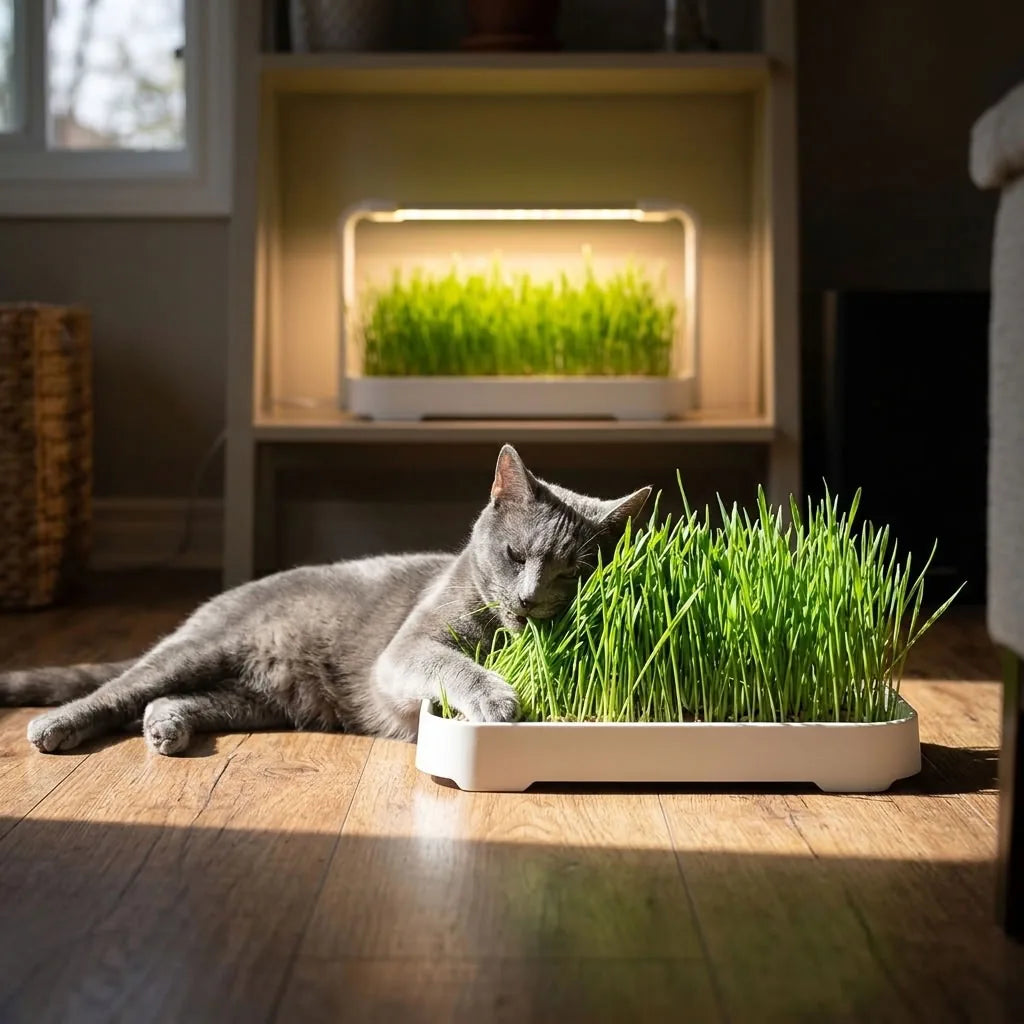
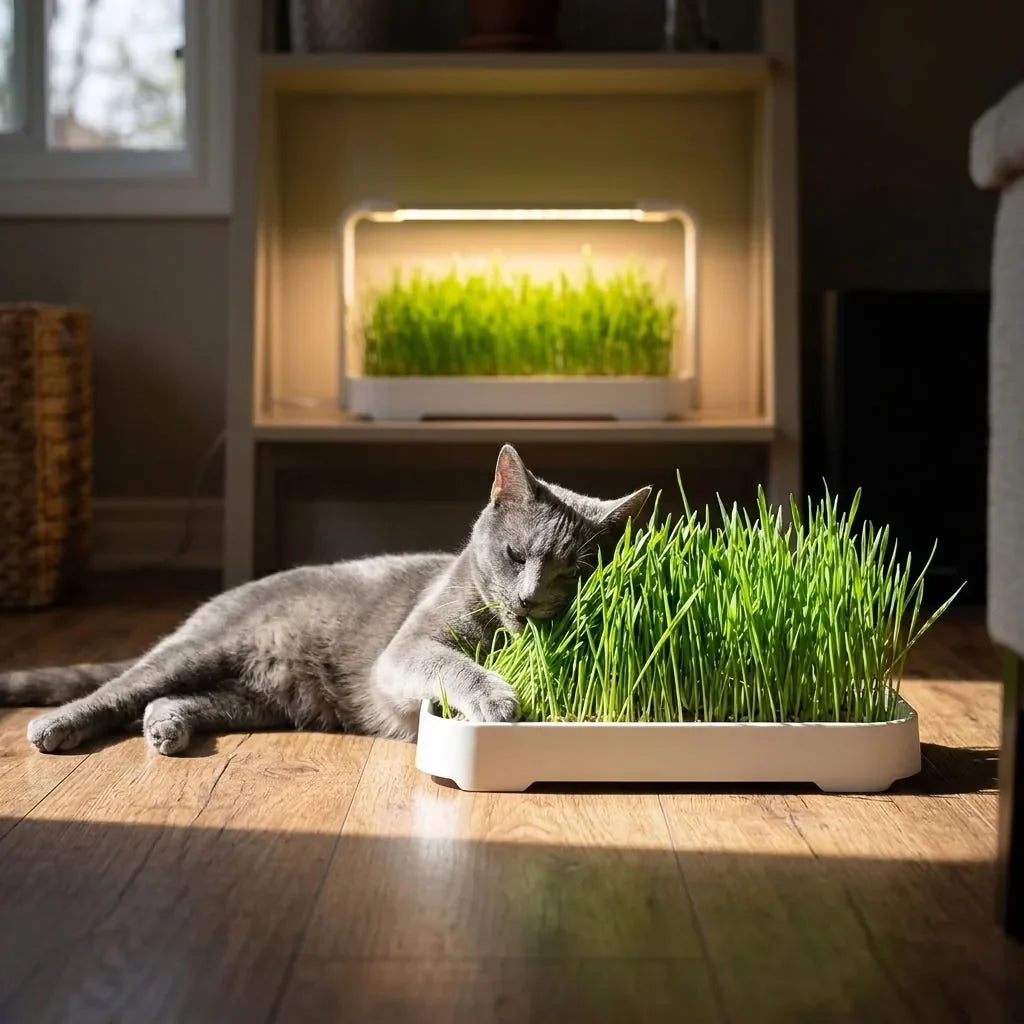
- Give your cat something better to chew. A tray of fresh grass, such as the Cat Grass Growing Kit with LED Light, gives chewing a place to land.
Look the plant up by its Latin name in the ASPCA toxic and non-toxic plant list. Common names are shared by very different plants, and "lily" is the best example, because a peace lily and an Easter lily are not close relatives. The plant tag at the nursery usually has the Latin name.
If a plant is not on the list, ask your vet before you buy it. If it is on the toxic list, decide whether you can keep it in a room your cat never enters. For many households the easier choice is to pick a different plant.
Keep the plant tag or take a photo of the plant when you buy it. If your cat ever chews it, you can tell the vet exactly what it was. If your cat keeps going back to the same plant, our post on cat eating plants explains why and how to stop it.
What to Grow Instead: Plants Your Cat Can Be Around
Spider plant, Boston fern, areca palm, African violet, peperomia and orchids are all marked non-toxic to cats on plant lists adapted from the ASPCA. They cover most of what people want from houseplants: trailing leaves, tall palms, flowers and low light options. Our list of house plants safe for cats sorts 25 of them by light level.
Even non-toxic plants can cause vomiting if a cat eats a lot of them, so a plant on this list is a lower risk choice, not a snack. Check the Latin name of any plant before you buy it.

Many cats chew leaves because they like to graze. The plant made for that job is fresh grass, and you can grow a tray of it for your cat in about a week. The Cat Grass Growing Kit with LED Light below is built for exactly that.
Give Them a Safe Plant of Their Own
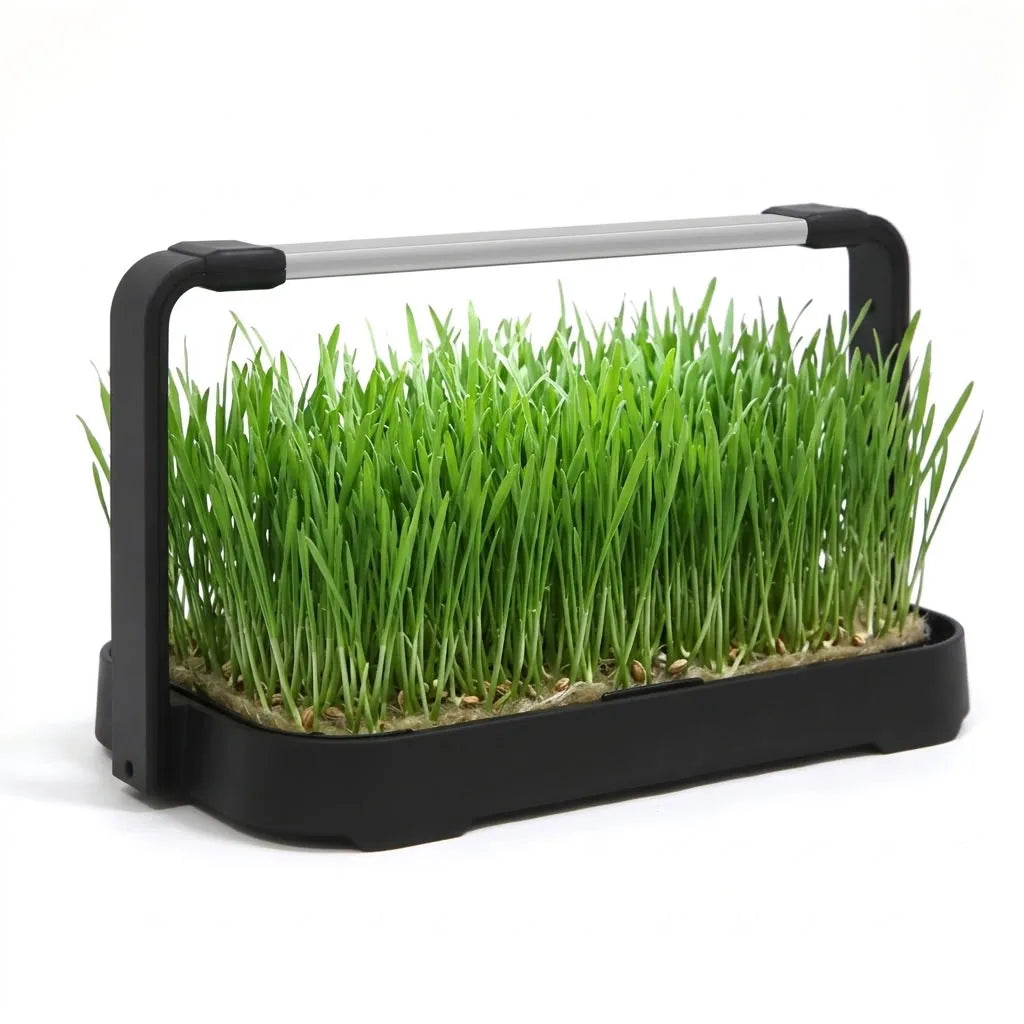
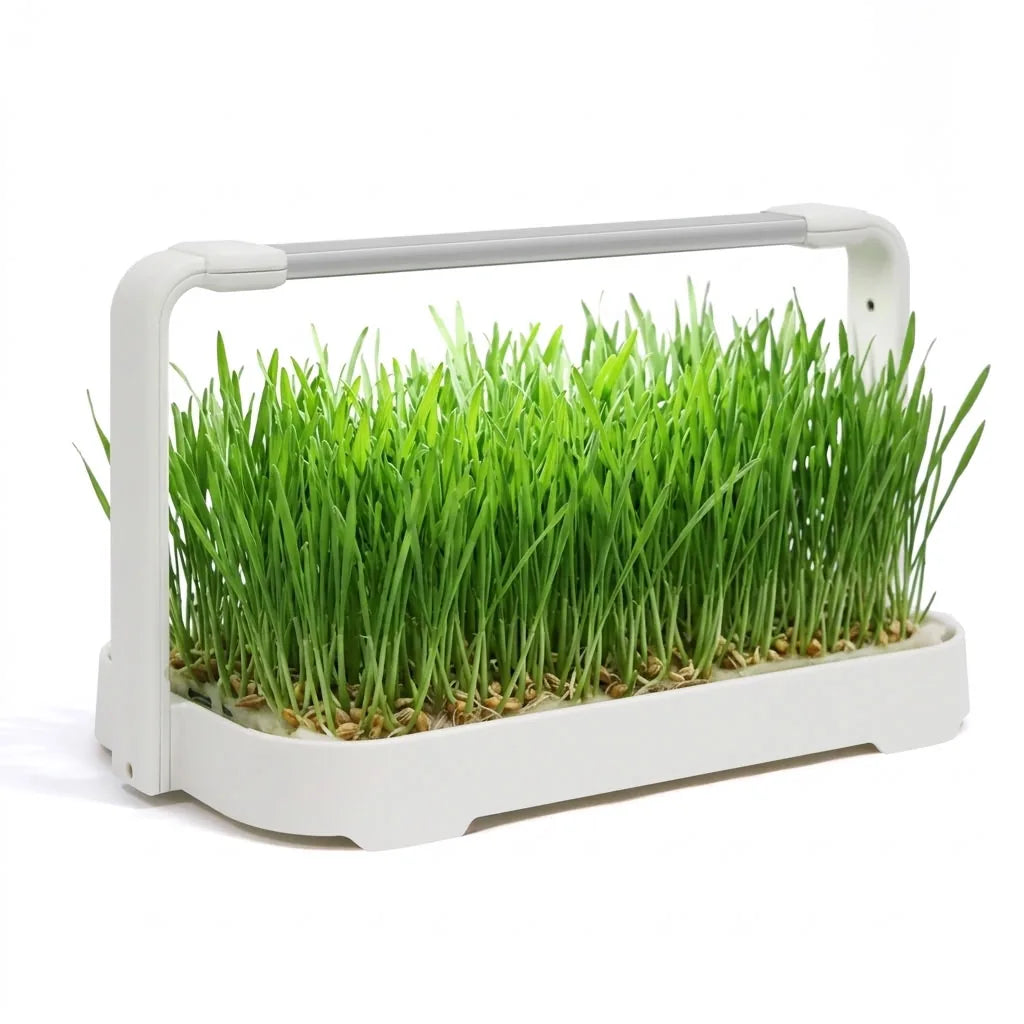
The Cat Grass Growing Kit with LED Light has a self-watering base, a built-in 10W LED on a timer, 2 packs of USDA-certified organic wheatgrass seed and 2 grow mats. There is no soil to spill and no window needed, so the tray can sit in any room you choose.

Fresh grass is ready in 7 to 12 days, and a new tray gives your cat a steady place to chew. The tray works like a microgreens tray, so our guide on how to grow microgreens at home covers the basics too. To learn more about the plant itself, read about wheatgrass for cats, why cats eat grass and cat grass vs catnip.


Frequently Asked Questions
Are all houseplants toxic to cats?
No. Spider plant, Boston fern and areca palm are examples of plants marked non-toxic to cats, but many popular houseplants, including lilies, pothos and sago palm, are toxic. Check each plant by its Latin name before you bring it home.
Are cut flowers and bouquets toxic to cats?
Some are. Lilies are the biggest concern, and the water in the vase counts too. Tulips, daffodils and chrysanthemums can also make a cat sick, so ask the florist to leave lilies out and keep bouquets out of your cat's reach.
How much of a toxic plant does it take to make a cat sick?
It depends on the plant. For lilies, Pet Poison Helpline says any amount is a concern. For some others, such as azalea, a small amount usually causes mild stomach upset and large amounts are the bigger risk, but always call a vet rather than guess.
What should I do if I do not know which plant my cat ate?
Call your vet or a poison hotline right away and take a photo of every plant your cat could have reached. The FDA advises bringing the plant or a photo of it to the clinic so it can be identified.
Lilies, sago palm and oleander are the plants to keep away from cats completely. Pothos, philodendron, monstera, aloe and snake plant cause milder problems, but they still deserve a call to the vet. If your cat chews something on this list, call a vet or a poison hotline right away. To give your cat something better to chew than your houseplants, grow a tray of its own with the Cat Grass Growing Kit with LED Light.
Author: Aquager Team · Published: 2026-11-09 · Updated: 2026-11-09



0 comments