
Lilies toxic to cats is the warning every cat owner should know before the next bouquet arrives. A lily on the dining table looks harmless, yet it is one of the few common plants that can lead to kidney failure in a cat. Easter and Mother's Day are two of the busiest times of year for lily bouquets, so spring is when many cats are exposed.
Cornell's Feline Health Center says that even one bite of a lily can cause kidney failure. This guide explains which lilies are dangerous, what the signs look like and what to do in the first hour. It also covers the lookalike plants that are only mildly harmful.
One note first: this is general information, not veterinary advice. If you think your cat has had any contact with a lily, call a vet or a poison hotline right away.
Are Lilies Toxic to Cats?
Yes. True lilies and daylilies are among the most dangerous plants for cats. Cornell's Feline Health Center says even one bite can lead to kidney failure, and the ASPCA says small amounts can cause severe kidney injury. Every part of the plant is a risk.
The FDA lists Asiatic, daylily, Easter, Japanese show, Oriental, rubrum, stargazer, tiger and wood lilies as dangerous. These are common in bouquets and gardens. A small amount of leaf or petal, pollen licked off fur, or vase water can be enough to cause kidney failure, according to the FDA.
Are Lilies Dangerous for Cats Even If They Only Touch the Pollen?
Yes. Pet Poison Helpline counts any amount of leaf, stem, flower, pollen, vase water or root as an exposure to a lily. A cat does not have to chew the bouquet. Brushing past the flowers and then grooming pollen off its fur can be enough.
- Chewing leaves, stems or petals is the most obvious way a cat is exposed.
- Licking pollen off its fur or paws after brushing past the flowers is easy to miss.
- Drinking water from the vase counts as an exposure too.
- Digging in a pot or chewing the root of a garden lily is a risk outdoors.
A high shelf does not fix this. Cats jump, and fallen petals and pollen end up on tables and floors.
Which Lilies Are Toxic to Cats, and Which Are Not?
True lilies and daylilies are the ones that can cause kidney failure. Peace lilies, calla lilies and Peruvian lilies share the name but not the danger, and they cause milder problems. Lily of the valley is a separate risk, because it affects the heart. When a flower has lily in its name, check the Latin name before you decide.
| Plant | Group | What it can do to a cat |
|---|---|---|
| Easter, stargazer, tiger, Asiatic and Oriental lilies | Lilium (true lilies) | Kidney failure, even from a small exposure. |
| Daylilies | Hemerocallis | Severe kidney injury. |
| Peace lily | Spathiphyllum | Mouth pain, drooling, vomiting or diarrhea. Not kidney failure. |
| Calla lily | Zantedeschia | Mouth irritation, drooling, vomiting and trouble swallowing. |
| Peruvian lily | Alstroemeria | Mild vomiting and diarrhea. Not expected to harm organs. |
| Lily of the valley | Convallaria | Heart rhythm problems and serious poisoning. |
Are Easter Lilies Toxic to Cats?
Yes. The Easter lily is a true lily and one of the most dangerous. Cornell's Feline Health Center warns about it by name, and any part of the plant can cause harm. Easter lilies are sold everywhere in the weeks before Easter, so they often arrive as gifts.
Are Daylilies Toxic to Cats?
Yes. Daylilies can cause severe kidney injury in cats, according to the ASPCA, even though they are not true lilies. They grow in many yards and are sold as perennials, so check the garden as well as the vase.
Are Peace Lilies Toxic to Cats?
Yes, but in a milder way. The peace lily is not a true lily. Chewing it releases calcium oxalate crystals that cause mouth pain, drooling, vomiting or diarrhea. It does not cause kidney failure in cats, but call a vet if your cat chews one.
The ASPCA notes that swelling in the mouth can very rarely make breathing hard, which is another reason to call.
Are Calla Lilies Toxic to Cats?
Yes. The ASPCA lists calla lily as toxic to cats because of insoluble calcium oxalates. Signs include mouth irritation, drooling, vomiting and trouble swallowing. Like the peace lily, it is not a true lily, and the FDA says the signs usually pass on their own.
What Are the Signs of Lily Poisoning in Cats?
Early signs are tiredness, drooling, vomiting and loss of appetite, usually in the first 12 hours. Later signs include more urination and dehydration, followed by kidney failure. The FDA says kidney failure can follow within 24 to 72 hours. The early signs can look mild, so do not wait for them.
- In the first 12 hours, a cat may be less active, drool, vomit and stop eating.
- Between 12 and 24 hours, kidney damage can show up as more urination and dehydration.
- Between 24 and 72 hours, kidney failure can develop, and it is fatal without treatment.
Time matters. The FDA says that if treatment is delayed by 18 hours or more after a cat eats a lily, the kidney failure is generally irreversible. The ASPCA also says kidney injury from lilies is often fatal if treatment is delayed longer than 18 hours. That is why a cat that seems fine is not a reason to wait.
What Should I Do If My Cat Ate a Lily?
Call your vet or a pet poison hotline right away, even if your cat seems fine. Do not wait for signs. The ASPCA Animal Poison Control Center is at (888) 426-4435 and Pet Poison Helpline is at (855) 764-7661. A consultation fee may apply, so ask about the cost when you call.
- Move your cat away from the plant and keep it somewhere calm.
- Call your vet or a poison hotline and follow what they tell you.
- Bring the plant or a photo of it, as the FDA advises, so the vet can tell which kind of lily it was.
- Write down roughly when it happened and how much your cat may have eaten or licked.
- Do not make your cat vomit unless a vet or poison control operator tells you to, as Cornell's Feline Health Center advises.
What If My Cat Only Sniffed the Lily or Got Pollen on Its Fur?
Still call. Pet Poison Helpline counts any amount of pollen as an exposure, and cats groom pollen off their fur and swallow it. Ask the hotline how to remove the pollen safely before your cat licks it off.
How Do I Keep Lilies Away From My Cat?
The safest choice is to keep lilies out of any home with a cat. Ask the florist to leave them out of bouquets you buy, and tell friends and family before they send flowers. If lilies arrive anyway, take them out of the home and pour out the vase water.
- Check every bouquet for lilies before you bring it inside, especially around Easter and Mother's Day, when lilies are common.
- Ask the sender or florist to use cat-safe flowers instead.
- Pick up fallen petals and wipe up pollen from tables and floors right away.
- Pour out vase water as soon as the flowers are gone.
- Look at the garden for daylilies and tiger lilies if your cat goes outside.
What Flowers Can I Buy Instead of Lilies?
Roses and moth orchids are both listed as non-toxic to cats by the ASPCA. They give you a safe bouquet or a flowering plant that lasts for weeks. Even non-toxic plants can upset a cat's stomach, so treat them as safe to be around, not as a snack.
Our list of house plants safe for cats has more choices, and the guide to plants toxic to cats covers the other flowers to avoid. For bouquet ideas, see our guide to cat safe flowers.
What Can My Cat Chew Instead of Flowers?
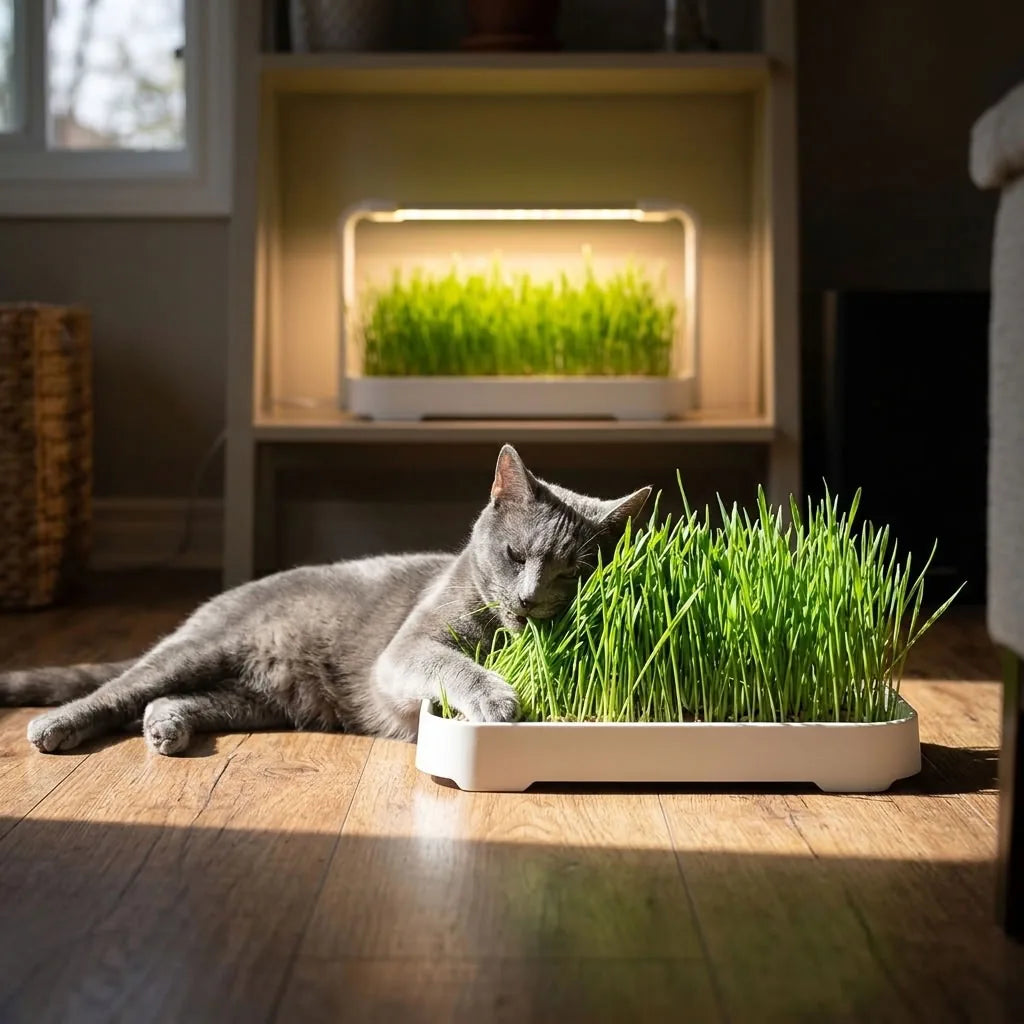
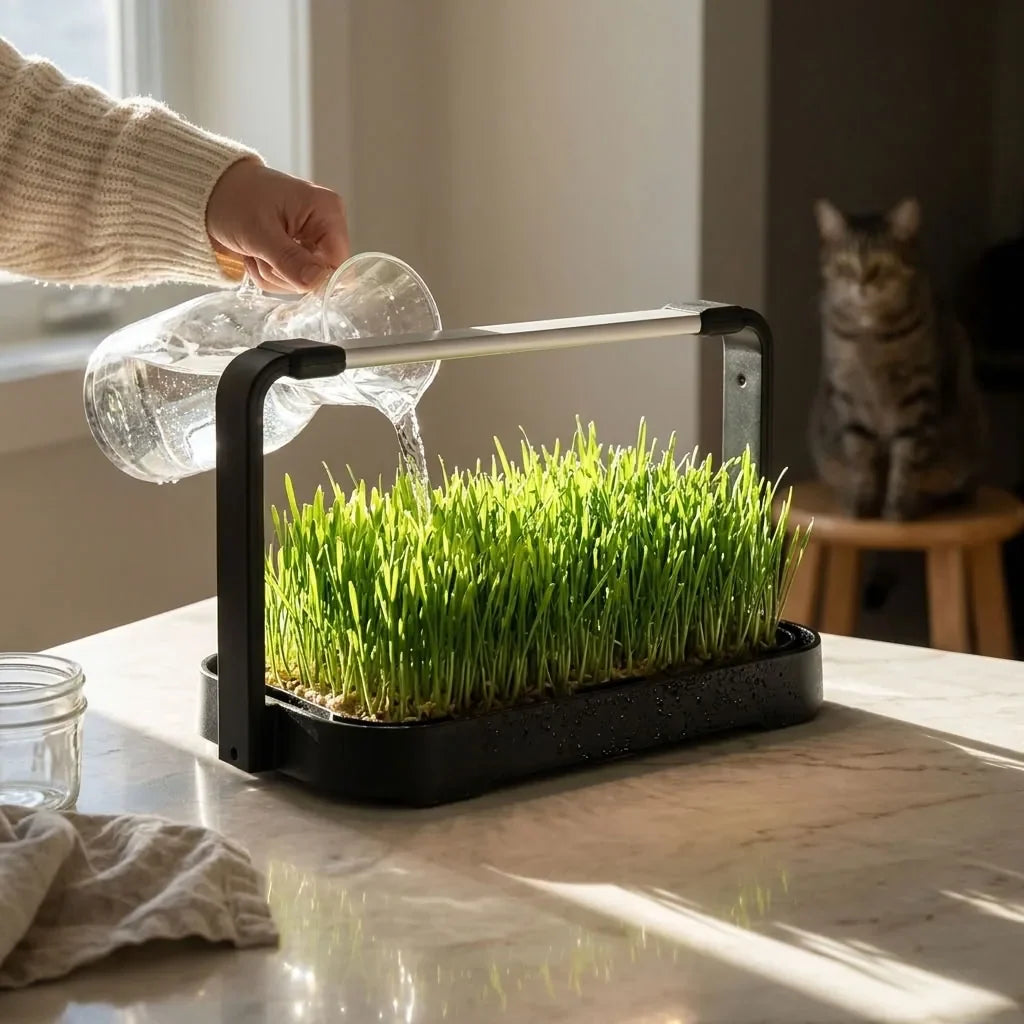
Fresh cat grass gives a chewing cat a plant of its own. It does not make lilies safe, so the lilies still have to stay out of the house, but a tray of grass gives your cat a better target than your bouquet. The Cat Grass Growing Kit with LED Light is made for this.
It grows a tray of wheatgrass in 7 to 12 days. The kit comes with a self-watering base, a built-in 10W LED on a timer, 2 packs of USDA-certified organic wheatgrass seed and 2 grow mats. There is no soil to spill and no window needed, so you can put the tray in any room.

How Do I Get My Cat to Use the Grass?
Place the tray where your cat already goes, such as near the window, the bed or the food bowl. Some cats need a day or two to investigate it. A UC Davis survey found that 71% of cats had been seen eating plants at least 6 times, as we explain in our post on cat eating plants, so a safe option is worth having.

To learn more about the grass itself, read about wheatgrass for cats, why cats eat grass and cat grass vs catnip.
What Else Do Cat Owners Ask About Lilies and Cats?
Can a cat survive eating a lily?
Yes, especially when treatment starts early. Cornell's Feline Health Center says cats treated quickly have a much better outlook, and the FDA says early treatment greatly improves the prognosis. Cats that are treated late often develop kidney failure that cannot be reversed.
My cat ate a lily and seems fine. Do I still need a vet?
Yes. The first signs can be mild, and kidney damage can build up over 12 to 72 hours before it shows. Call your vet or a poison hotline right away.
Are pollen free lilies safe for cats?
No. Removing the pollen does not make a true lily safe, because the leaves, stems, petals and vase water are also toxic to cats. The safest choice is to leave lilies out of the home.
Is lily of the valley safe for cats?
No. Lily of the valley is not a true lily, but the ASPCA says it contains cardiac glycosides that cause vomiting, diarrhea and an irregular heartbeat. The FDA also says it can cause serious poisoning.
Is a lily on a high shelf safe from my cat?
No. Cats jump and climb, and petals and pollen fall to the floor. The only safe place for a true lily is outside your home, away from your cat.
What Is the Safest Plan for Bouquet Season?
- Tell your florist and your family that no lilies can come into the house.
- Check every bouquet and plant by its Latin name before it comes inside.
- Keep the numbers for your vet, the ASPCA and Pet Poison Helpline somewhere easy to find.
- Give your cat a tray of fresh grass so it has something better to chew than a bouquet.
Lilies are one of the few common flowers that can seriously harm a cat, so the plan is simple: keep them out, know who to call and give your cat a safe plant of its own. A tray from the Cat Grass Growing Kit with LED Light takes 7 to 12 days to grow.

Author: Aquager Team · Published: 2026-11-09 · Updated: 2026-11-09





0 comments