
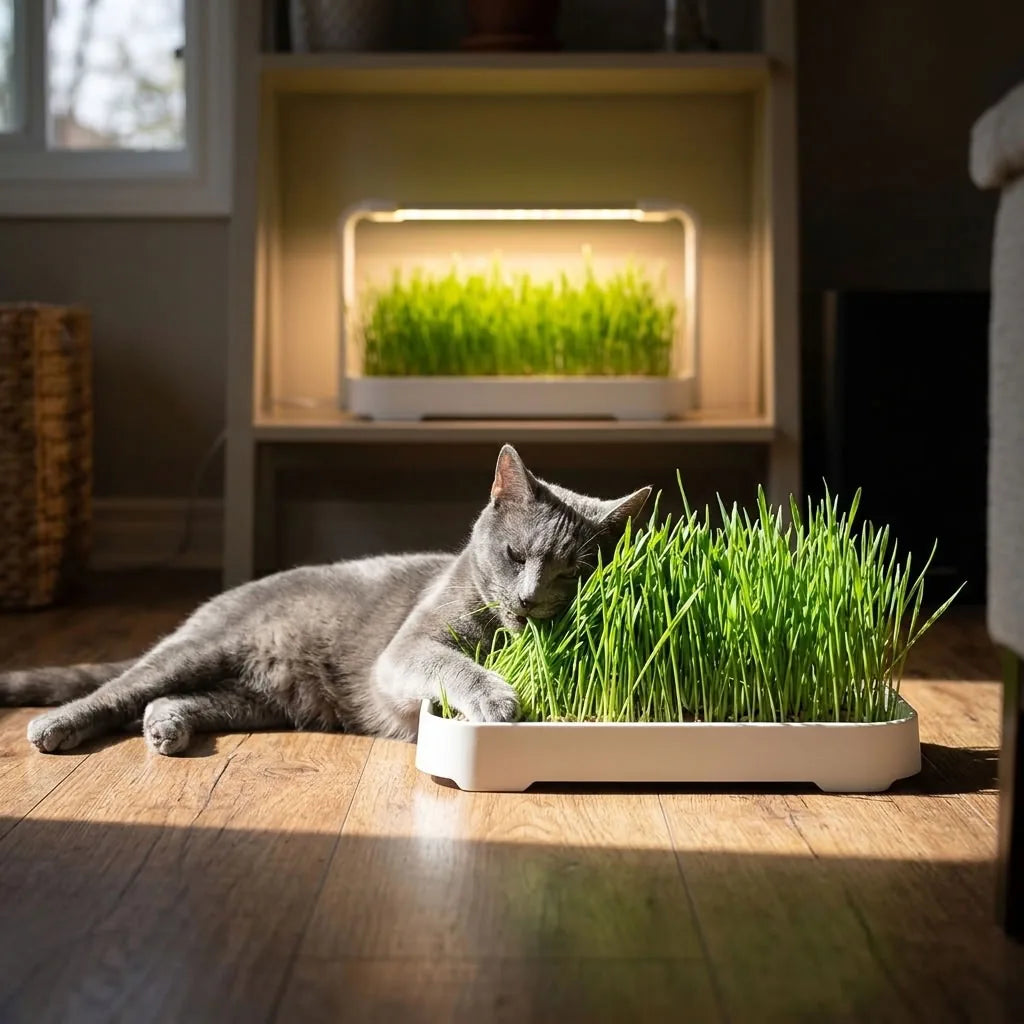
Cat enrichment ideas are the easiest way to keep an indoor cat busy when winter keeps everyone inside. Your cat cannot hunt, climb or explore outdoors, so your home has to offer those chances. A few small changes, such as a food puzzle or a new perch, can make a long day more interesting.
This guide gives 15 ideas, from food puzzles and window perches to a tray of fresh grass. Most cost little or nothing, and you can start with one or two. The ideas follow guidance from Ohio State University's Indoor Pet Initiative and the American Association of Feline Practitioners.
One note first: this is general information, not veterinary advice. If your cat suddenly changes its eating, litter box habits or behavior, call your vet before you assume it is bored.
What Is Cat Enrichment, and Why Do Indoor Cats Need It?
Cat enrichment means giving an indoor cat things to hunt, climb, scratch, chew and watch, so it can act like a cat. Ohio State University's Indoor Pet Initiative says that a lack of hunting outlets can deprive cats of mental and physical activity, which may contribute to obesity and other health problems.
The AAFP adds that a cat's key resources, such as food, water, resting spots, scratching surfaces and play, should be spread through the home where the cat actually spends time. Pick one idea from each group below and see which ones your cat likes.
Which Food Puzzles and Feeding Ideas Work for Indoor Cat Enrichment?
Food is the simplest place to start, because every cat eats. These three ideas turn a meal into a small hunt.
1. Food Puzzle Feeders
Ohio State suggests serving some meals in a puzzle toy that gives out dry food or treats when your cat paws or bats it. Start with an easy setting so your cat wins quickly, then make it harder. A puzzle feeder gives a cat a small hunt for every meal.
2. Wet Food in Hollow Toys
Ohio State also suggests stuffing hollow toys with wet food, so your cat has to work to get it out. Use a small amount at first, and wash the toy after each use.
3. Several Small Meals
Ohio State favors several small meals over one or two large ones, because free access to food removes the hunting outlet. Split the daily portion into smaller meals and put one of them in a puzzle toy. Ask your vet how much your cat should eat each day.
What Play Is Good Enrichment for House Cats?
Play copies hunting, so chasing, pouncing and biting are normal. These four ideas give your cat safe ways to do all three.
4. Wand Toys
Wand toys let your cat chase, pounce and bite, which the AAFP describes as normal hunting behavior. Keep play away from your hands and feet, as Ohio State advises, so your cat does not learn to pounce on people.
5. Battery Toys and Light Games
Battery-powered toys that move like prey and light-beam games are both on Ohio State's list. End a light game with a treat or a toy, so your cat does not get frustrated.
6. Rotate Toys Every Few Days
Ohio State recommends rotating toys every few days to keep them novel. Keep half of the toys in a drawer and swap them each week. A toy that has been away for a while may feel new again.
7. Short Training Sessions
The AAFP suggests several training sessions of 5 to 10 minutes a day instead of one long session. Teach an easy trick, such as coming when called, and reward it with a small treat. Training gives your cat a job to do.
How Can an Indoor Cat Watch the World From Inside?
Watching is a real activity for a cat. These two ideas bring the outdoors to your cat.
8. A Window Perch
Ohio State lists window perches for watching wildlife as enrichment. Put the perch where your cat can see outside and the sun reaches it. Ohio State also names outdoor cats at windows as a stressor, so move the perch if your cat seems upset by what it sees.
9. Cat Videos
Ohio State also lists cat-oriented videos (it names DVDs) as an enrichment option. Play a nature video for short stretches and see whether your cat watches.
Where Can a Cat Climb, Scratch and Hide?
Hiding places and high perches matter indoors, because the AAFP says they give cats safety and extra usable space. These four ideas cover climbing, scratching and hiding.
10. Cat Trees and Shelves
Put perches in several rooms, safe from people and other animals, as Ohio State suggests. A cat tree, a sturdy shelf or even a clear stretch of the top of a bookcase can work. Make sure each perch is stable before your cat jumps on it.
11. Scratching Posts
Scratching keeps claws healthy and leaves scent, according to the AAFP. Ohio State suggests sisal-covered posts or bark-covered logs near your cat's resting spots. Cats may prefer upright, flat or angled surfaces, so try more than one.
12. Cardboard Boxes
The AAFP says hiding spaces help cats feel safe, and it lists cardboard among the materials cats like to scratch. A cardboard box with a hole cut in one side is a free hiding place and a scratching surface. Replace it when it gets worn out, and leave a few boxes in different rooms.
13. A Quiet Safe Haven
Ohio State suggests setting up safe havens in quiet rooms. If you have guests, noisy holiday visitors or other pets, a quiet room with a bed or box gives your cat somewhere calm to go. Keep the door open so your cat can come and go as it likes.
What Can an Indoor Cat Chew and Graze On?
Ohio State lists cat-safe grasses, live greens and fresh catnip as chewing options for indoor cats. These two ideas give your cat something to nibble that is not your houseplant.
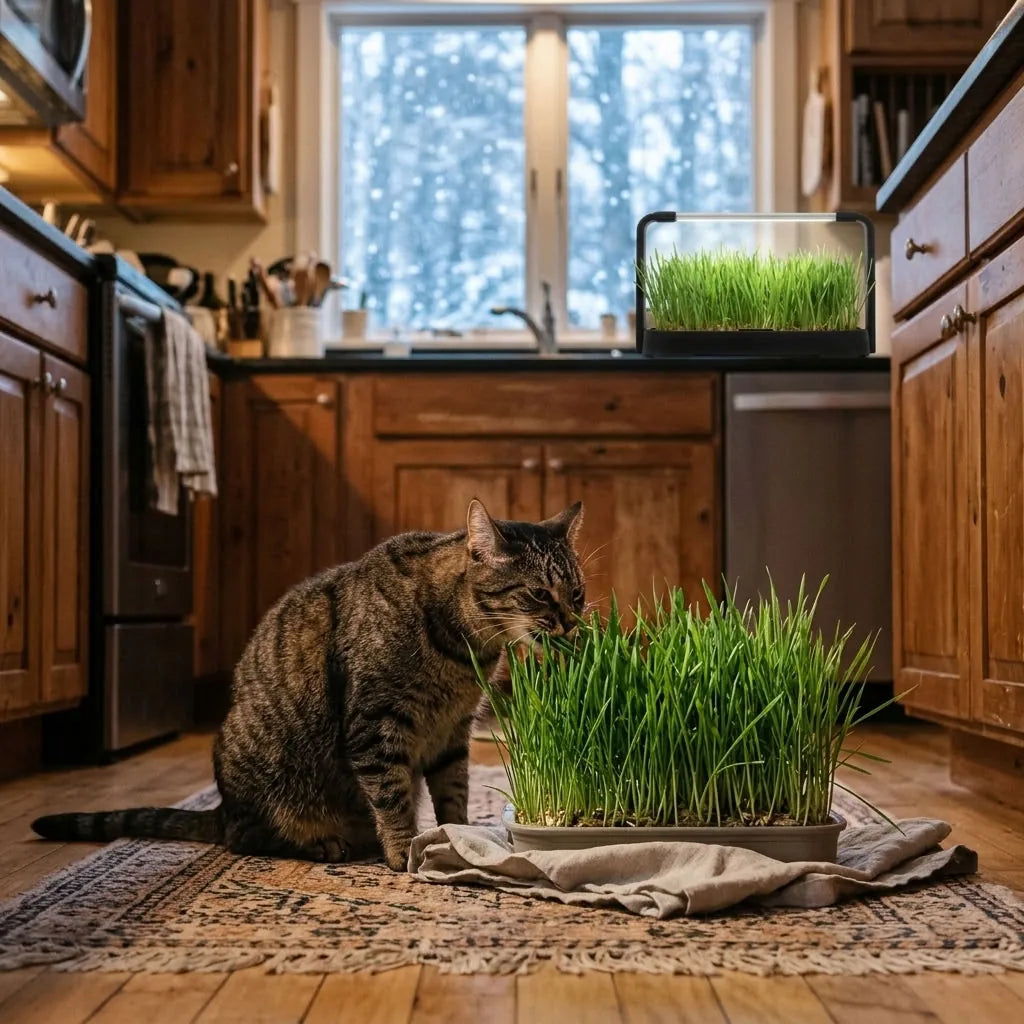
14. A Grass Tray to Graze
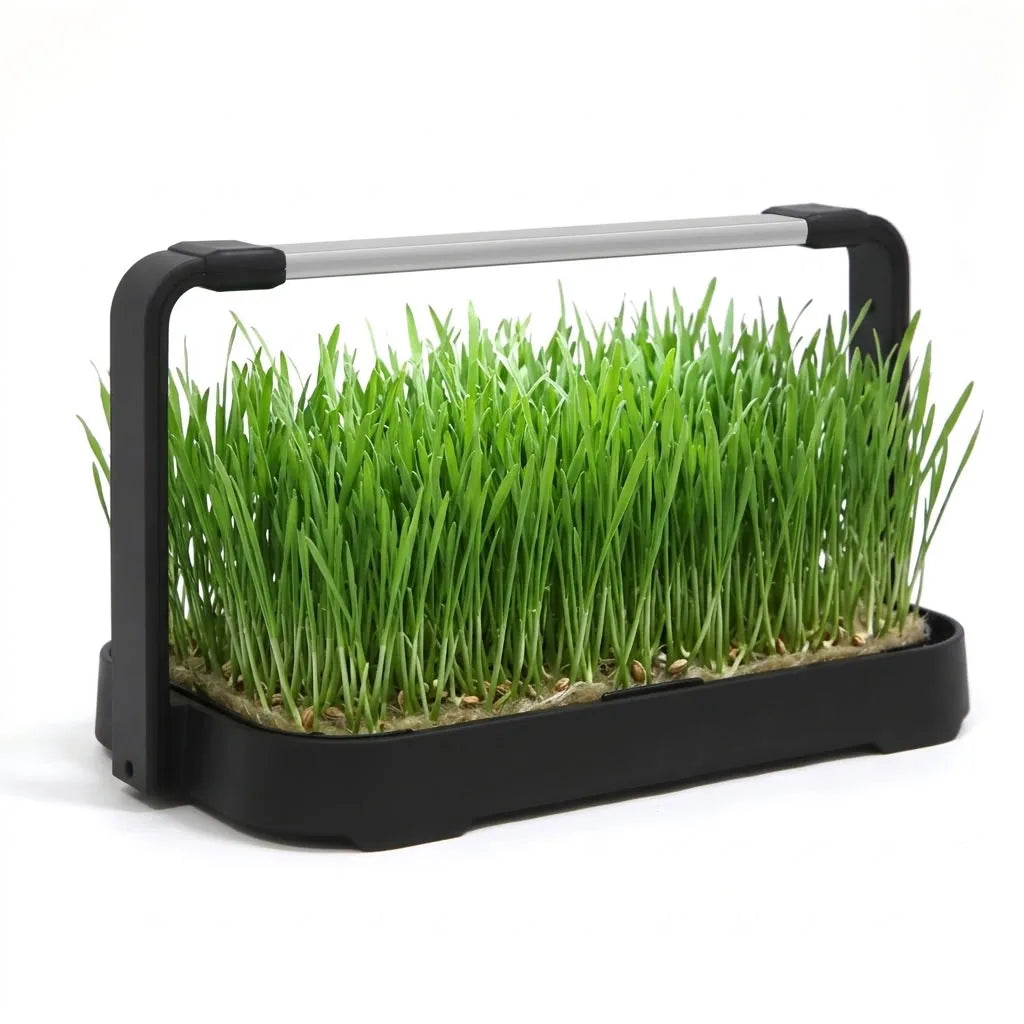
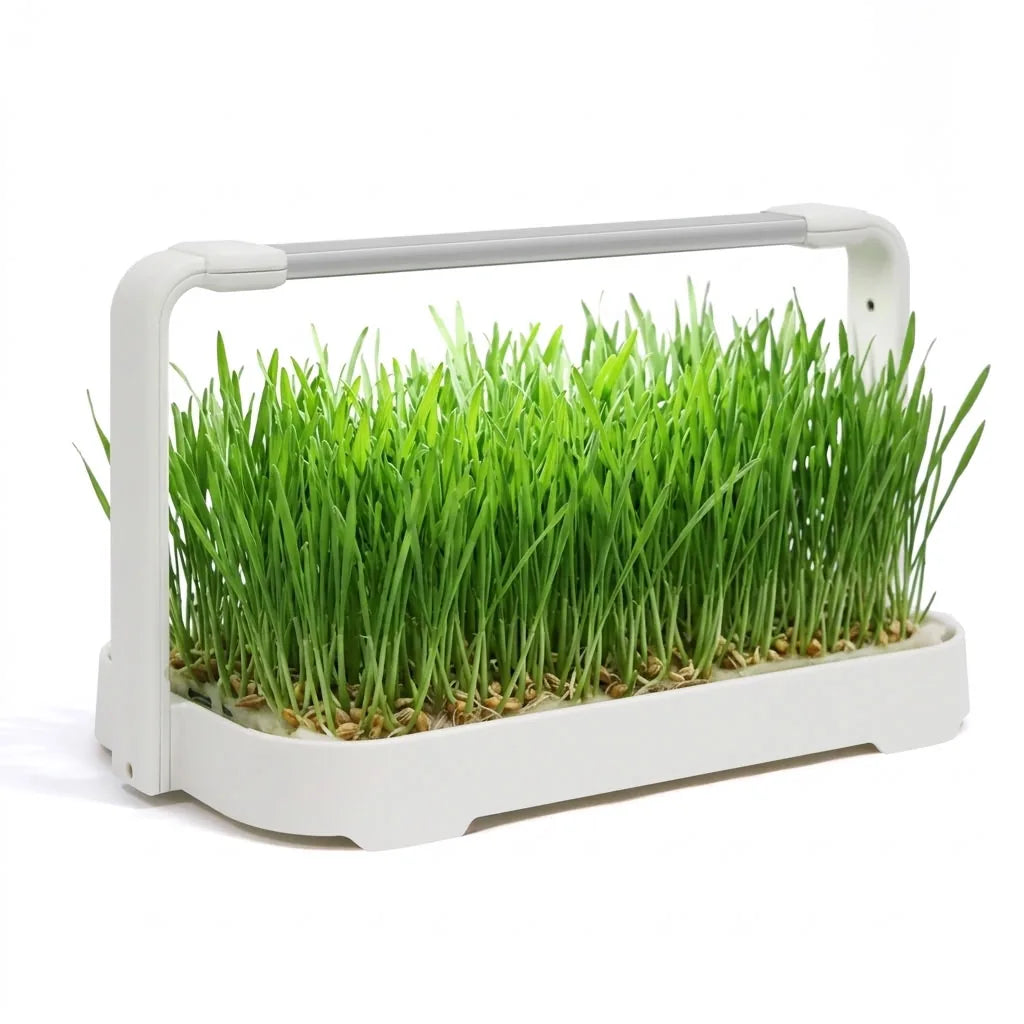
A tray of fresh wheatgrass gives your cat something green to chew, even in January. The Cat Grass Growing Kit with LED Light grows a tray in 7 to 12 days. It comes with a self-watering base, a built-in 10W LED on a timer, 2 packs of USDA-certified organic wheatgrass seed and 2 grow mats, so there is no soil to spill and no window needed.
To learn more about the grass itself, read about wheatgrass for cats and why cats eat grass.

15. Fresh Catnip
Ohio State lists fresh catnip as a chewing option too. Our post on cat grass vs catnip explains how catnip and grass differ, so you can offer both.
If you keep other plants, check them first. Ohio State advises removing toxic plants or keeping them in a room the cat cannot enter. Our lists of house plants safe for cats and plants toxic to cats show which is which, and the post on cat eating plants explains why cats chew plants at all.
What Else Do Cat Owners Ask About Cat Enrichment?
What is the easiest cat enrichment idea to start with?
A food puzzle or a window perch is a simple start, because both are on Ohio State's list and need little setup. Pick one, watch how your cat reacts and add another idea next week.
How often should I rotate my cat's toys?
Ohio State recommends rotating toys every few days to keep them novel. Keep some toys put away and swap them in turn.
Is cat grass good for indoor cats?
Ohio State lists cat-safe grasses and live greens as chewing options for indoor cats. Our post on wheatgrass for cats explains how to grow a fresh tray.
How long should a training session with my cat last?
The AAFP suggests several sessions of 5 to 10 minutes a day instead of one long session. Stop while your cat is still interested.
What if my cat is stressed by outdoor cats at the window?
Ohio State names outdoor cats at windows as a stressor for indoor cats. Move the perch to a window with a different view, and call your vet if your cat's behavior changes.
What Is the Simplest Winter Plan for an Indoor Cat?
- Pick one feeding idea, such as a puzzle feeder, and use it for one meal a day.
- Add a short play session with a wand toy, and rotate the toys every few days.
- Set up a window perch or a cardboard box so your cat has a place to watch and hide.
- Put a tray of fresh grass where your cat likes to rest.
Four small changes are enough to make a winter day more interesting for an indoor cat, and the Cat Grass Growing Kit with LED Light covers the grass tray with one setup.

Related reading: oat grass for cats, catnip vs catmint and cat grass mold.
Author: Aquager Team · Published: 2026-11-09 · Updated: 2026-11-09


0 comments