
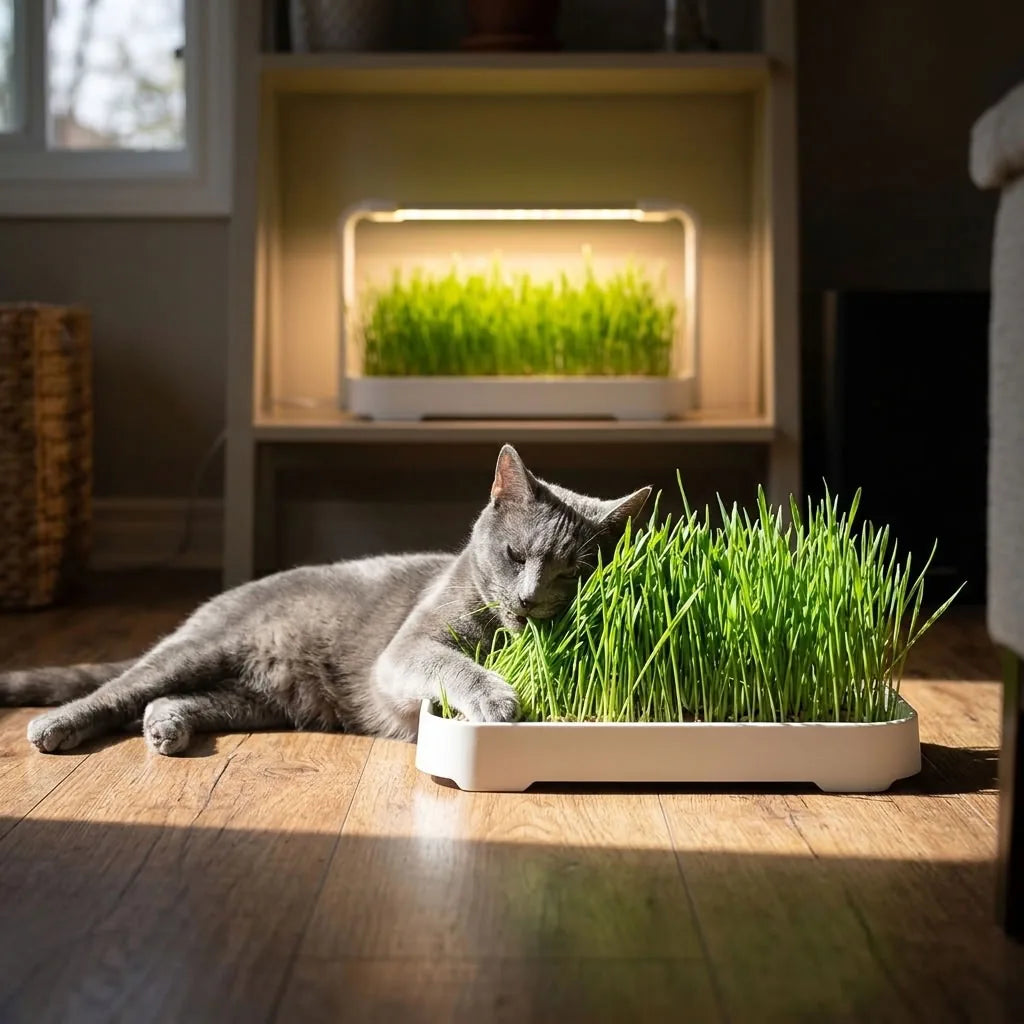
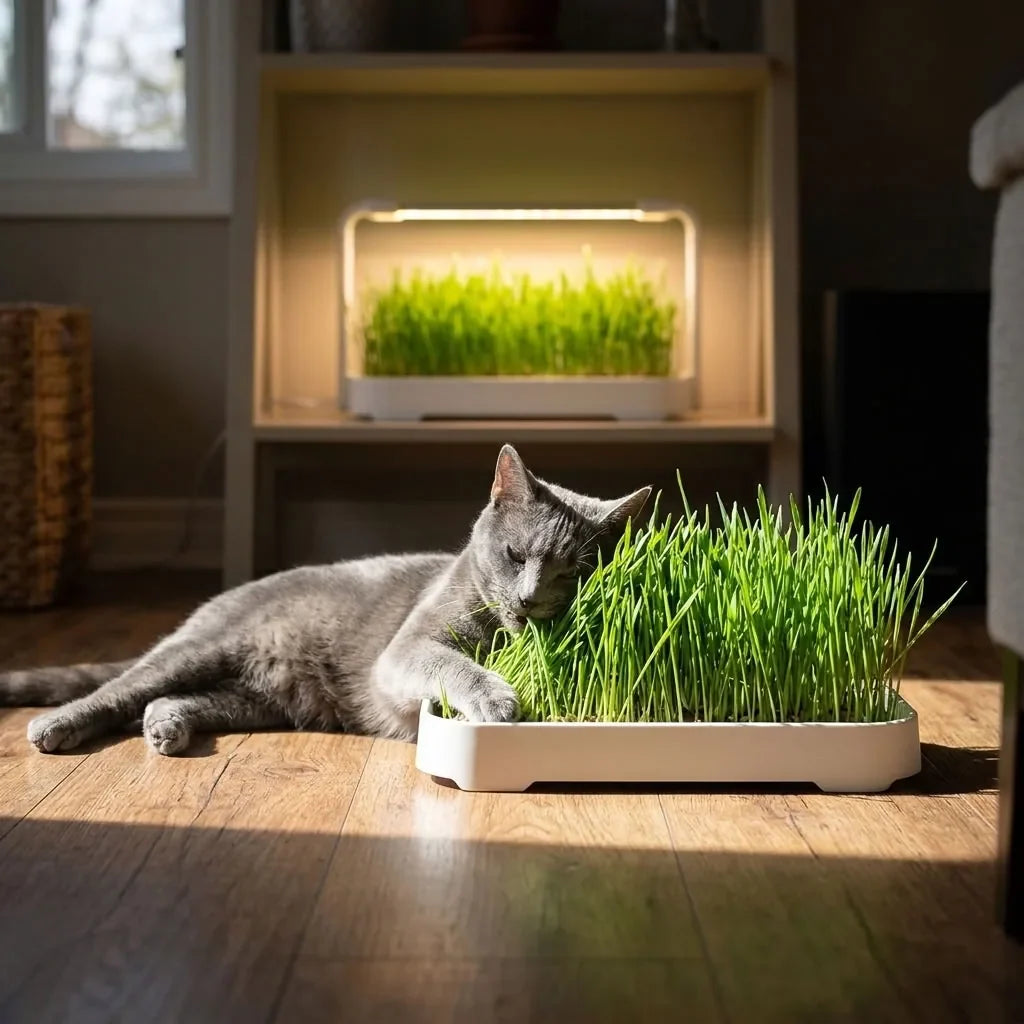
Bringing home a kitten and a tray of fresh grass in the same week raises a fair question: is cat grass for kittens a good idea? Kittens chew on everything, and their stomachs are small and still growing. You want to know the grass will not make things worse.
The vet sources we read say cat grass is generally fine for kittens once they are weaned, if the grass is clean and you start small. They do not fully agree on the exact age, so this guide shows what each source says and what to ask your vet.
One note first: this is general information, not veterinary advice. We did not find research on kittens and cat grass specifically, so the guidance below comes from veterinarians quoted by pet care sites and from vet clinic articles. If your kitten has a sensitive stomach or any health problem, ask your vet before you start.
Is Cat Grass Safe for Kittens?
Yes, cat grass is generally safe for kittens that are weaned and eating solid food, according to veterinary staff quoted by Petco. The grass needs to be clean, grown indoors without pesticides, and free of mold. Start with small amounts, and ask your vet first if your kitten has a sensitive stomach.
Chewy's guide says it is generally safe for cats to eat grass and suggests cat grass kits so cats can chew in a supervised setting. Cats Protection, a UK cat charity, says grass is generally safe to eat, but not when it is contaminated with herbicides or pesticides.
Kittens are a special case because they are curious. In Chewy's guide, veterinarian Dr. Maggie Placer says younger cats ate plants more often than older cats. A safe tray of their own gives a curious kitten something better to chew than your houseplants.
When Can Kittens Start Eating Cat Grass?
The sources do not agree. A veterinarian quoted by Petco says you can give a kitten cat grass at any age, while a veterinary technician there says once it is weaned. Catster suggests waiting until a kitten is close to adult size, around 6 to 7 months. If you are unsure, follow your vet.
Here is the timeline that matters. PetMD, in an article by veterinarian Krista Seraydar, DVM, says kittens are typically ready for solid food at about 4 weeks, and most are fully on solid kitten food by 8 weeks. So a kitten under 8 weeks is usually still weaning, which is a good time to wait on grass.
The 6 to 7 month advice on Catster comes from the article's author and was fact-checked by a veterinarian. Its reasoning is that a kitten's digestive system is still maturing. A practical middle path is to ask your vet at your kitten's next visit, and to start only after weaning is complete.
How Much Cat Grass Should a Kitten Eat at First?
Keep it small. VCA Animal Hospitals says moderation is key, because too much grass can cause excess vomiting. We found no source that gives an exact amount for kittens, so we suggest starting with a few sprigs and watching how your kitten does before offering more. Ask your vet if you are unsure.
VCA Animal Hospitals also says treats, grass included, should be no more than 10% of a cat's total calories. For a growing kitten, that is a reason to keep grass as a small extra and not a meal. Catster adds that if a cat overindulges, you can limit grass to once or twice a week for no more than 5 minutes.
PetMD suggests offering cat grass when it is about 3 to 4 inches tall, and says most cats only nibble the tops. Keep the first sessions short, and stay nearby so you can see how your kitten reacts.
What Makes Cat Grass Unsafe for a Kitten?
Four things make cat grass unsafe: mold, pesticides or herbicides on treated lawns, soil and roots swallowed with the grass, and other toxic plants nearby. VCA Animal Hospitals notes that mold can upset the digestive tract and may be toxic, and that treated outdoor grass can be harmful to eat.
- Mold can upset the digestive tract and may be toxic, so VCA Animal Hospitals advises replacing grass that looks sickly.
- Cats Protection says to keep cats away from lawns treated with herbicides or pesticides, and notes that grass seeds in summer can lodge in the ears, nose, eyes or paws.
- VCA Animal Hospitals says intestinal parasite eggs can survive in soil for long periods, so a cat that eats roots and dirt along with the grass can become infected.
- VCA Animal Hospitals says cats may not tell safe plants from poisonous ones, and names rhododendron and tiger lily as examples to keep out of reach.
For a full list of what to keep away from a curious kitten, read our guide to plants toxic to cats.
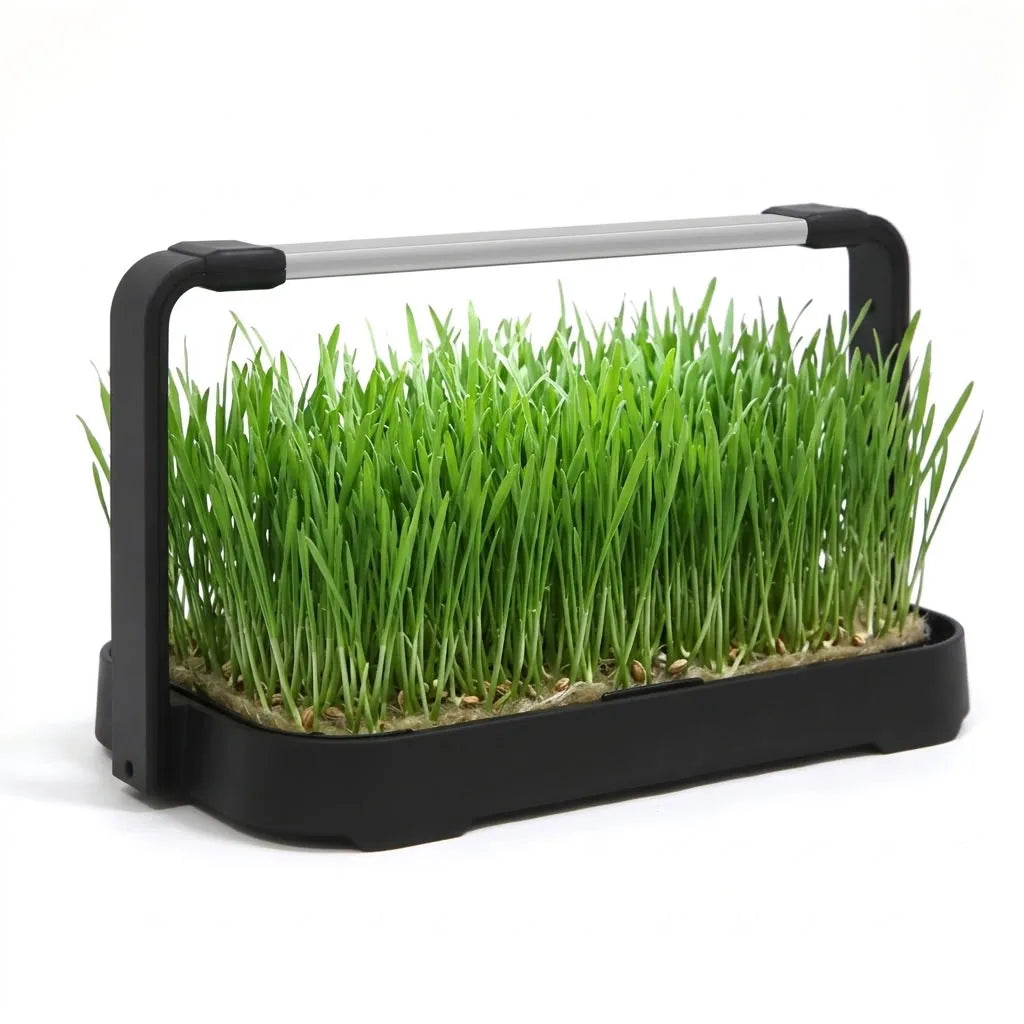
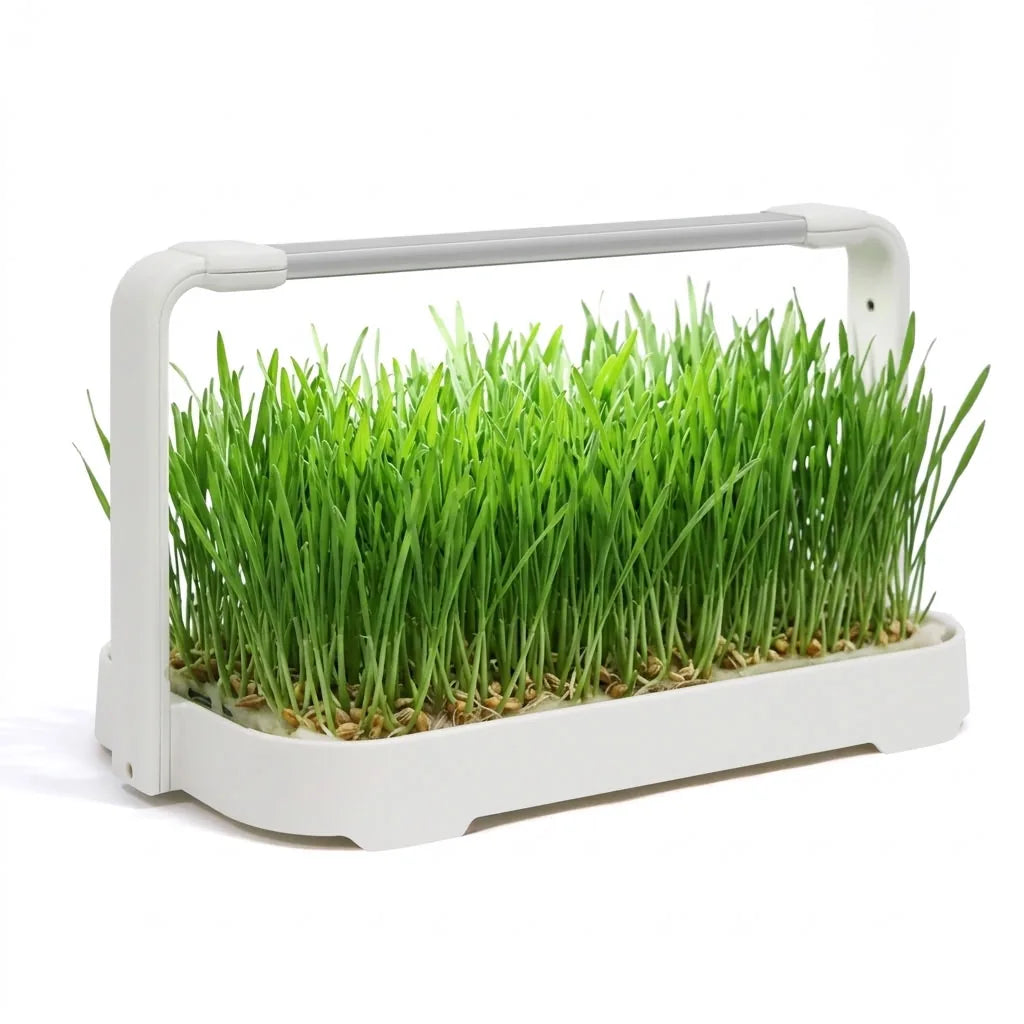
The Cat Grass Growing Kit with LED Light grows wheatgrass on a grow mat with no soil, so there is no dirt to swallow with the roots. It comes with 2 packs of USDA-certified organic wheatgrass seed, and fresh grass is ready in 7 to 12 days. No kit removes every risk, so check the tray every day and replace grass that looks sickly.

What if Your Kitten Vomits or Seems Off After Eating Grass?
Occasional vomiting after grass can be normal in cats, according to Catster. But PetMD says a kitten with vomiting, diarrhea, low energy or loss of appetite should be examined by a vet promptly. Call your vet if you see any of those signs, or if your kitten may have eaten something harmful.
Chewy's guide, which quotes veterinarians, lists these signs for a call to the vet: vomiting more than twice a month after eating grass, lethargy, loss of appetite, diarrhea, blood in the stool, or changes in water intake or litter box habits.
Coughing or sneezing also needs attention. Catster says that if it lasts more than 24 hours after eating grass, a piece of grass may be stuck under the soft palate and a vet visit is needed.
If you think your kitten ate something harmful, call your vet, Pet Poison Helpline at (855) 764-7661, or the ASPCA Animal Poison Control Center at 888-426-4435 right away. The ASPCA notes that a consultation fee may apply.
How Do You Grow Clean Cat Grass for a Kitten?
Grow it indoors, keep the growing medium moist but not soggy, and replace any grass that looks sickly. Offer it when it is about 3 to 4 inches tall. Start a new tray every week or two so your kitten always has young, fresh grass.
PetMD says cat grass grown indoors can grow mold when it is overwatered, so add water slowly. It also reports that the Humane Society suggests planting new pots a week or two apart.
The Cat Grass Growing Kit with LED Light does the setup for you: a self-watering base, a built-in 10W LED and 2 grow mats, so the grass grows in any corner without a window. For the full day-by-day method, see our guide to wheatgrass for cats.

What Is the Simple Way to Start Cat Grass With a New Kitten?
Wait until your kitten is weaned and eating solid food, then ask your vet at the next visit. Start with a few sprigs of clean, indoor-grown grass for short sessions, and watch for vomiting or low energy. Replace grass that looks sickly, and keep toxic plants out of reach.
- Check with your vet first, especially if your kitten has a sensitive stomach.
- Offer a few sprigs when the grass is 3 to 4 inches tall.
- Stay nearby for the first sessions and watch for vomiting, diarrhea or low energy.
- Skip the lawn, which may be treated with pesticides or herbicides.
- Grow a fresh tray every week or two, and throw out grass that looks sickly.
Curious why your kitten goes for grass at all? Read our post on why cats eat grass. And if you want a clean, soil-free tray ready in 7 to 12 days, the Cat Grass Growing Kit with LED Light is a simple way to start. Your kitten gets safe grass to chew, and your houseplants get a break.
What Else Do Kitten Owners Ask About Cat Grass?
Can an 8-week-old kitten eat cat grass?
Sources differ. PetMD says most kittens are fully on solid food by 8 weeks, and a veterinary technician quoted by Petco says kittens can start once they are weaned. Ask your vet at the first checkup before you offer grass.
Can kittens eat cat grass every day?
We found no source that sets a daily limit for kittens. VCA Animal Hospitals says moderation is key, and Catster says a cat that overindulges can be limited to once or twice a week for no more than 5 minutes. Ask your vet what suits your kitten.
Is lawn grass safe for kittens?
Not if it may be treated. Cats Protection says grass is not safe when it is contaminated with herbicides or pesticides, and VCA Animal Hospitals says treated outdoor grass can be harmful to eat. Cat grass you grow indoors avoids lawn treatments.
Is cat grass safe for kittens if it has a little mold?
No. VCA Animal Hospitals says mold can upset the digestive tract and may be toxic, so remove the tray and grow a new batch.
Related reading: cat grass mold, oat grass for cats and catnip vs catmint.
Author: Aquager Team · Published: 2026-11-09 · Updated: 2026-11-09


0 comments