
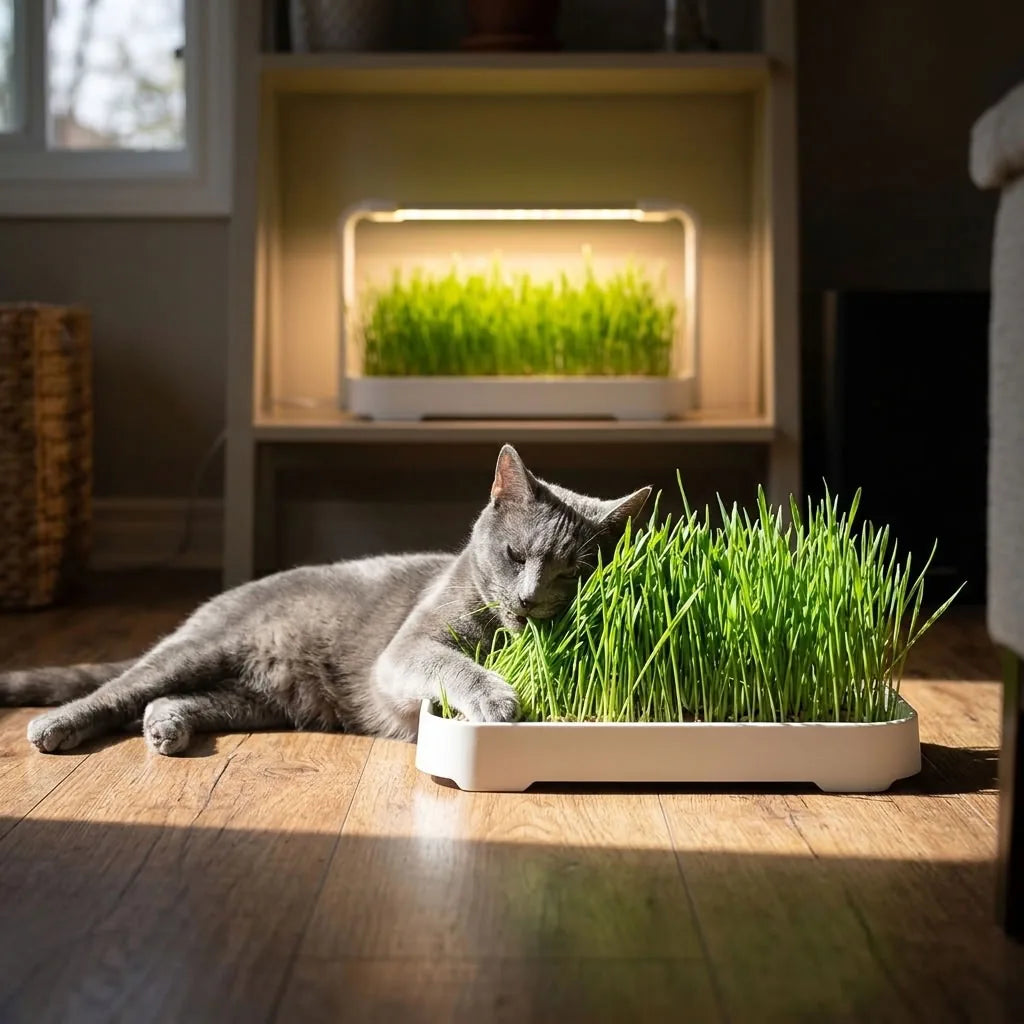
Cat grass mold is a common reason people give up on growing grass for their cat. You water it, you wait, and a week later there is white fuzz on top and a musty smell. If you have been burned before, the grower guides we read say mold comes mostly from moisture and airflow, which you can control.
This guide shows how to tell mold from harmless root hairs, what to do if your cat ate some, and 5 causes to fix so you can prevent mold on your next tray.
One note first: this is general information, not veterinary advice. Most of our sources are grower guides about microgreens and wheatgrass, and we found no research on mold in cat grass itself. When in doubt, throw the tray out and call your vet.
Is It Cat Grass Mold or Just White Fuzz From the Roots?
Fine white fuzz around the base of each blade is usually root hairs, which are normal. Mold looks like spiderweb growth across the surface, feels slimy and smells musty. HortiDaily warns that color alone is not a reliable test, so check the texture, the location and the smell.
True Leaf Market says the fine white hairs on roots are a sign of healthy growth, and that mold looks like a spiderweb across the surface. HortiDaily adds that root hairs feel soft and feathery, while mold feels slimy.
Our guides on microgreens have mold and microgreens mold cover the same test in more detail for microgreens.
Is Moldy Cat Grass Safe for Cats?
Do not let your cat eat moldy cat grass. Pet Poison Helpline lists moldy food as toxic to pets, including cats, and says signs can include vomiting, drooling, tremors and seizures. We found no research on mold on cat grass itself, so call your vet if your cat ate some.
If your cat ate moldy grass, call your vet, the ASPCA Animal Poison Control Center at 888-426-4435, or Pet Poison Helpline at (855) 764-7661. Take the tray away right away so your cat cannot go back to it.
Mistake 1: Overwatering Your Cat Grass
Excess moisture is the main trigger for mold, according to True Leaf Market. PetMD adds that indoor cat grass can grow mold over time, especially when it is overwatered. Keep the growing medium moist and spongy, not soggy, and do not let water pool on the surface.
True Leaf Market suggests watering from the bottom once the seeds have rooted, so the roots drink without soaking the top. A drainage tray nested inside a solid tray can help.
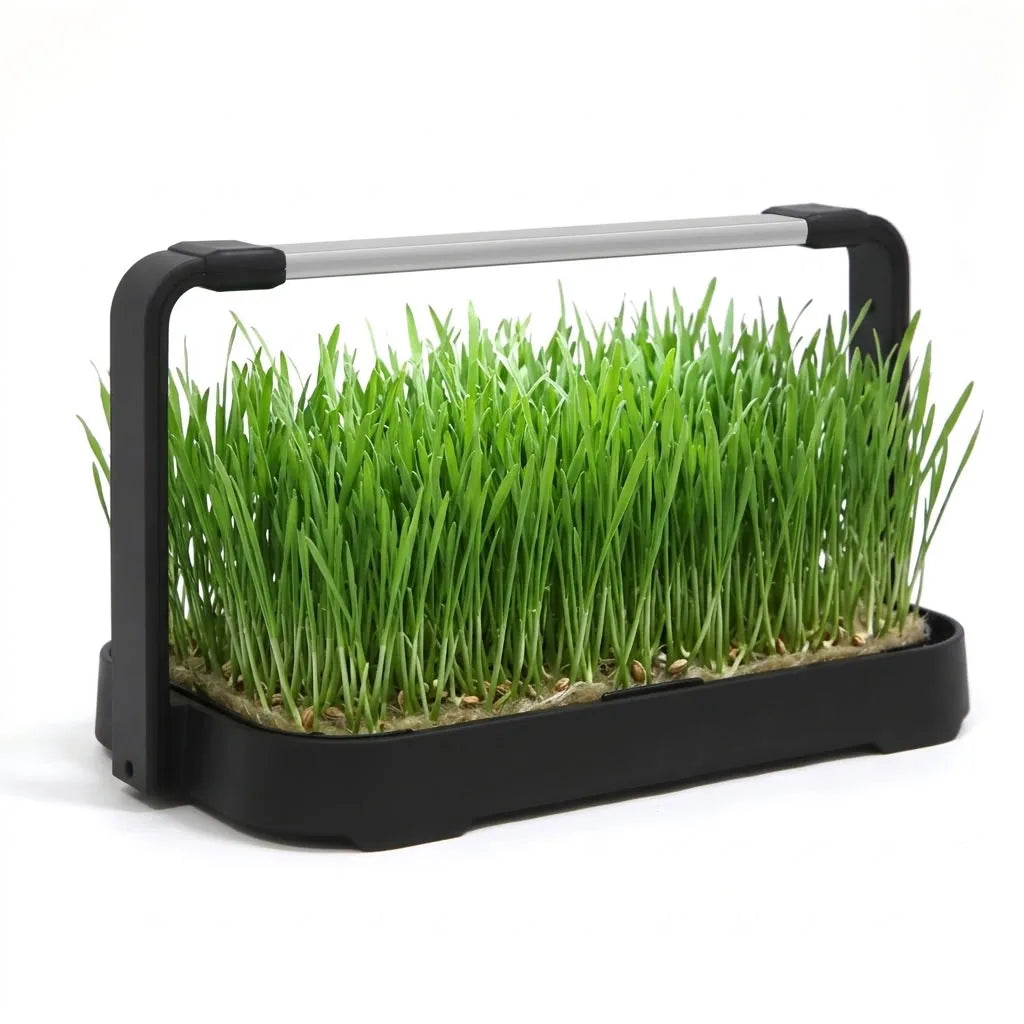
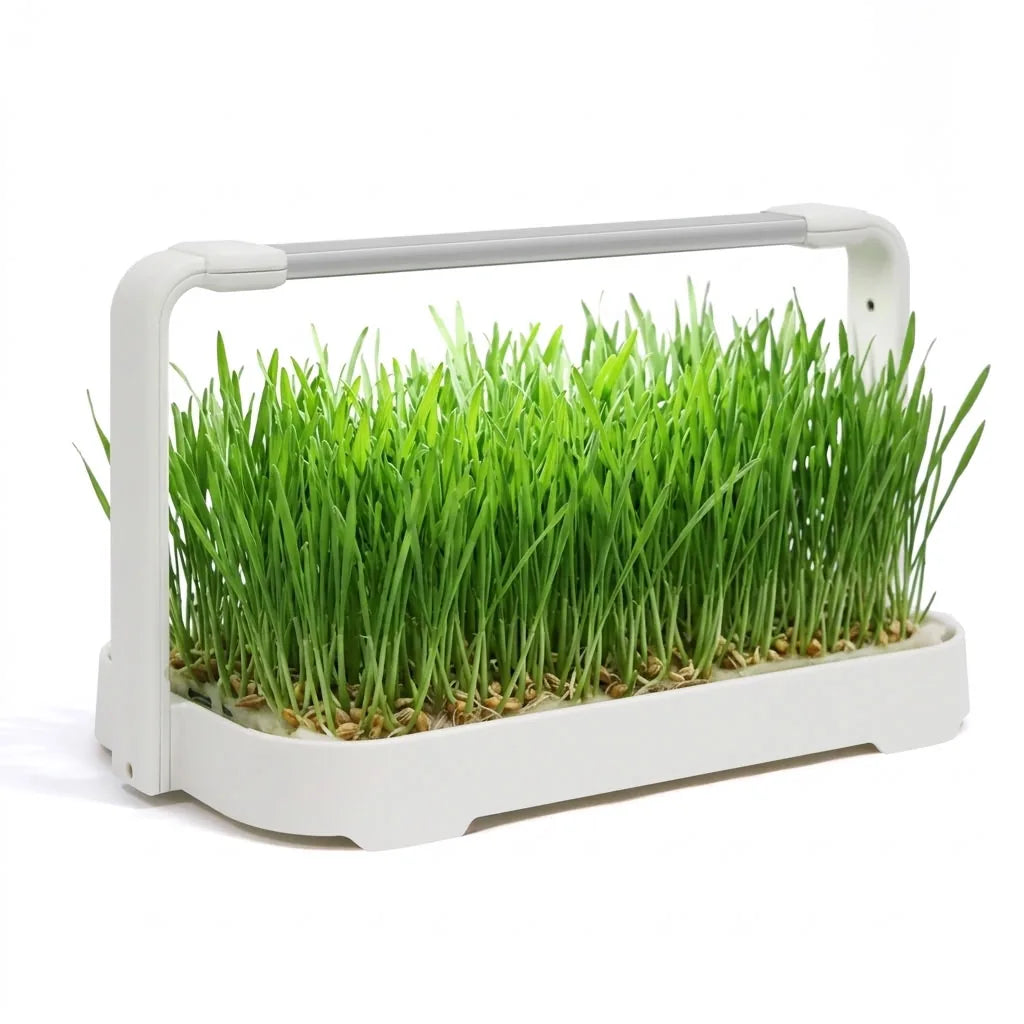
The Cat Grass Growing Kit with LED Light has a self-watering base, so you have a set place to add water instead of pouring it over the grass. A kit does not make a tray mold-proof, so the habits below still apply.

Mistake 2: Letting the Air Sit Still
Stagnant, humid air lets mold settle and spread. True Leaf Market says mold spores are always in the air and cannot be removed, so airflow is your best defense. A fan on low or a nearby open window helps, and opening the cover for a few hours lets moisture escape.
Epic Gardening also lists poor air circulation as a cause and suggests opening seed domes for a few hours so moisture does not build up. Keep the tray out of a closed cabinet or a damp corner.
Mistake 3: Sowing Seed Too Thickly
Dense or clumped seed holds moisture and invites mold. Epic Gardening, writing about microgreens, names dense seeding as a factor and advises spreading seed out instead of letting it clump. Scatter seed evenly and avoid piles in the corners of the tray.
Even spacing also lets air reach the surface of the mat, which ties back to Mistake 2.
Mistake 4: Keeping the Tray Dark and Wet Too Long
Dark, wet conditions favor mold. True Leaf Market says to check trays during blackout periods, when seeds sit in the dark under a cover. Look at the tray every day, and move it into light once sprouts appear, so damp seed does not sit in the dark for long.
We found no source saying low light alone causes mold. The risk comes from darkness combined with wet, still conditions. The Cat Grass Growing Kit with LED Light has a built-in 10W LED on a timer, so the light schedule is set and no window is needed.

Mistake 5: Reusing Dirty Trays or Old Grass
Mold spores can ride in on dirty trays. Epic Gardening advises cleaning trays before sowing. PetMD says a veterinarian it quotes recommends starting a new batch from scratch when cat grass gets moldy, so do not try to save a moldy tray.
HortiDaily also advises discarding a contaminated tray entirely, because mold spreads through spores and can stunt growth. Wash the container well before you plant again.
Plan for fresh trays anyway. PetMD says cat grass wilts within a few weeks, and the Humane Society, as PetMD reports, suggests planting new pots a week or two apart.
What Should You Do Right Now If You Find Mold?
Remove the tray so your cat cannot reach it, and do not try to save it. Wash the container well, then start a fresh batch with less water, more airflow and thinner seed. If your cat ate any of the moldy grass, call your vet or a poison control line right away.
- Take the tray out of your cat's reach.
- Throw out the grass and the mat, since sources advise starting over instead of cutting mold away.
- Wash the container before you plant again.
- Sow a thinner layer of seed and keep the surface moist, not soggy.
- Add airflow with a fan on low or an open window nearby.
- Check the new tray every day.
Myth: Soil, or No Soil, Is What Causes Cat Grass Mold
The sources we read blame moisture and airflow, not soil or soilless mats on their own. True Leaf Market says soil tends to regulate moisture better than hydroponic pads and suggests trying both. We found no source showing that either method prevents mold.
That is good news if you have been burned before. You do not have to change everything at once. Start with how much water you add, then add airflow, then thin out the seed.

What Is the Simple Checklist to Prevent Cat Grass Mold?
Check the tray every day, keep the surface moist but not soggy, and keep air moving. Spread seed evenly, clean the container before each batch, and replace any tray that smells musty or feels slimy. Fresh trays started a week or two apart keep your cat supplied without old grass.
- Add water slowly and stop before the surface looks shiny or pools.
- Run a fan on low or open a window near the tray.
- Scatter seed evenly in a thin layer.
- Wash trays before you sow.
- Throw out any tray with slimy, musty or web-like growth.
We left out sprays such as grapefruit seed extract or hydrogen peroxide, which some grower guides suggest, because we found no source on whether they are safe around grass your cat will eat. If you want a simple setup, the Cat Grass Growing Kit with LED Light grows a tray of wheatgrass in 7 to 12 days. For more on the grass itself, read our post on wheatgrass for cats, and for why cats chew plants at all, see cat eating plants.
What Else Do Cat Owners Ask About Cat Grass Mold?
Can I save moldy cat grass by trimming off the mold?
No. PetMD recommends starting a new batch from scratch when cat grass gets moldy, and HortiDaily advises discarding a contaminated tray entirely.
Does moldy cat grass have a smell?
Yes, it can. HortiDaily says mold smells musty or earthy, while healthy plants smell fresh.
How long does cat grass last before I replace it?
PetMD says cat grass wilts within a few weeks, so plant new pots a week or two apart.
Should I spray cat grass with peroxide or grapefruit seed extract?
Some grower guides suggest sprays, but we found no source on their safety around cat grass your cat will eat, so we do not recommend them. Replace the tray instead and ask your vet if you are unsure.
Related reading: oat grass for cats and cat grass for kittens.
Author: Aquager Team · Published: 2026-11-09 · Updated: 2026-11-09



0 comments