
Catnip vs catmint trips up a lot of cat owners. The plant tag says one thing, your cat's reaction says another, and the names show up as catnip, cat nip, catmint and cat mint. So are they the same plant?
Short answer: they are close cousins in the same plant genus, but they are not the same plant, and only catnip reliably excites most cats. This guide compares how they look, how cats react, whether each is safe, and how to grow them indoors.
One note first: this is general information, not veterinary advice. Our plant facts come from university extension pages and gardening sites, and our pet safety facts come from the ASPCA and a veterinarian-reviewed article. If you have questions about your own cat, ask your vet.
Catnip vs Catmint at a Glance
Catnip (Nepeta cataria) is the plant most cats go wild for, and catmint is the name for its garden cousins, which are grown mostly for their flowers. Both are in the mint family and the genus Nepeta. If you want a plant for your cat, choose true catnip.
| Catnip | Catmint | |
|---|---|---|
| Plant | Nepeta cataria | Nepeta x faassenii and other Nepeta |
| Family | Mint family (Lamiaceae) | Mint family (Lamiaceae) |
| Leaves | Gray-green, heart-shaped, scalloped | Gray-green, often low and mounded |
| Flowers | Small white spikes, often late in the season | Showy blue, purple, pink or white spikes |
| Height | About 2 to 3 feet | Varies by type; Faasen's catmint is low |
| Effect on cats | Many cats react | Most cats do not react |
| Best for | Your cat | Flower borders and pots |
| Verdict | Grow this for your cat | Grow this for flowers |
Sources for the table: University of Minnesota Extension, University of Arizona Extension and Fairfax Gardening.

Are Catnip and Catmint the Same Plant?
Not exactly. Both belong to the genus Nepeta and the mint family, so they are close relatives, but they are different plants. The confusion comes from names: the ASPCA lists catmint as a common name for catnip itself, and Fairfax Gardening notes that many Nepeta sold as catnip should be called catmint.
University of Minnesota Extension describes Faasen's catmint (Nepeta x faassenii), the common garden catmint, as a sterile hybrid of two other catmints. That makes it a different plant from true catnip, not another name for it.
So when someone says cat mint, they may mean catnip, or they may mean an ornamental garden plant. Check the Latin name on the tag: Nepeta cataria is true catnip.
How Do Catnip and Catmint Look Different?
Catnip grows about 2 to 3 feet tall with heart-shaped, scalloped, gray-green leaves and small white flowers. Garden catmint is usually lower and mounded, with showier flower spikes in blue, purple, pink or white that bloom for many weeks. Fairfax Gardening and University of Arizona Extension describe these differences.
Both can spread, and the sources do not fully agree on catmint. University of Minnesota Extension says catnip behaves as a naturalized weed that can spread by seed, and that Faasen's catmint is sterile with little risk of weedy spread. University of Arizona Extension says Faasen's catmint self-seeds and can spread almost to the point of being weedy.
Both are hardy perennials outdoors. University of Arizona Extension lists catmint as hardy to USDA zone 4, and University of Minnesota Extension says catnip is hardy to at least zone 4. Both like full sun and well-drained soil.
How Do Cats React to Catnip and Catmint?
About two thirds of cats respond to catnip, according to University of Arizona Extension, while Fairfax Gardening puts it at 50 to 75 percent. The reaction is an inherited trait, so some cats ignore catnip completely. The active compound is nepetalactone, and the effects last about 15 to 30 minutes.
University of Arizona Extension lists reactions such as licking, chewing, head shaking, cheek rubbing, rolling and drooling. Fairfax Gardening adds that very young kittens and senior cats are less likely to react, and that catnip is not addictive.
Catmint is less clear. University of Arizona Extension says Faasen's catmint does not stimulate cats, and Fairfax Gardening says only Nepeta cataria appeals to most cats. One University of Minnesota Extension author reported that her cat enjoyed both, so individual cats may differ.
If your cat likes chewing on greens, the other plant to know is cat grass. We compare it with catnip in our guide to cat grass vs catnip.
Is Catnip Safe for Cats?
Catster, reviewed by a veterinarian, says catnip is safe for cats in small, measured amounts, but overdoing it can cause an upset stomach, vomiting or diarrhea. The ASPCA plant database lists catnip as toxic to cats, with vomiting and diarrhea as signs, and notes that it sedates some cats and stimulates others.
Catster suggests starting with a very small amount, because fresh catnip is stronger than dried, and waiting about 30 minutes before offering more. It also advises asking your vet before you start, especially if your cat is aggressive, ill or recovering from an injury.
We found no source that states whether ornamental catmint is safe for cats to eat, so play it safe and keep it out of reach unless your vet says otherwise. Our guide to plants toxic to cats covers what else to watch for.
How Do You Grow Catnip Indoors?
Sow catnip seed on the surface of a well-draining mix and cover it only lightly, because the seed needs light to sprout. Epic Gardening says to give seedlings 10 to 12 hours of bright light and to keep indoor temperatures between 60 and 80°F. Let the soil dry between waterings.
- Sow the seeds on the surface, press them in and cover them barely, because light helps germination, according to Gardener's Path.
- Keep the mix evenly moist until seedlings appear. Epic Gardening says sprouting takes from about 5 days to a month.
- Give seedlings bright light for 10 to 12 hours a day, from a south-facing window or a grow light.
- Water the soil, not the leaves, and trim the top 4 to 6 inches of the stems to keep growth bushy, per Epic Gardening.
- Grow it in a pot to contain the spread, and keep young plants away from your cat, since University of Arizona Extension says they may need protection from cats.
If you would rather grow without soil, the Catnip Seeds come packed for hydroponic cups, with 30 seeds and 12 compostable grow mats. The listing says catnip sprouts in 7 to 14 days and takes about 50 days to grow.
Can You Grow Catmint Indoors Too?
Yes, in a pot, according to Fairfax Gardening, which says both catnip and catmint can be grown in containers. Most Nepeta need full sun or partial shade and well-drained soil, and overwatering can cause root rot. We found no source on indoor catmint specifically, so give it your brightest window.
Fairfax Gardening also says overcrowding can cause powdery mildew, so leave room for air to move.
We do not sell catmint seed, so look for Nepeta x faassenii at a garden center if you want the flowering kind.
Which Should You Grow, Catnip or Catmint?
Grow catnip if you want a plant for your cat, because only Nepeta cataria appeals to most cats. Grow catmint if you want long-blooming flowers in a garden bed or a pot. Cats also like cat grass, which is a different plant that grows in about a week.
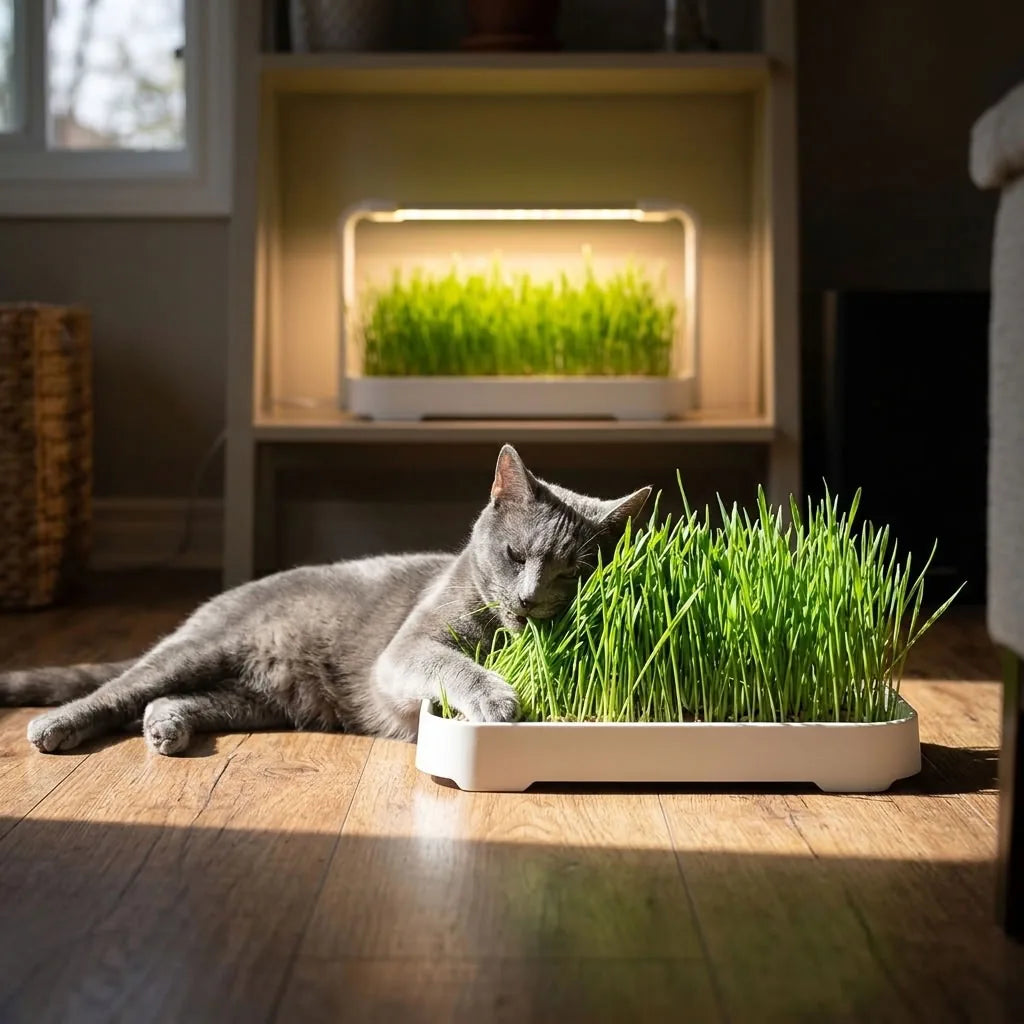
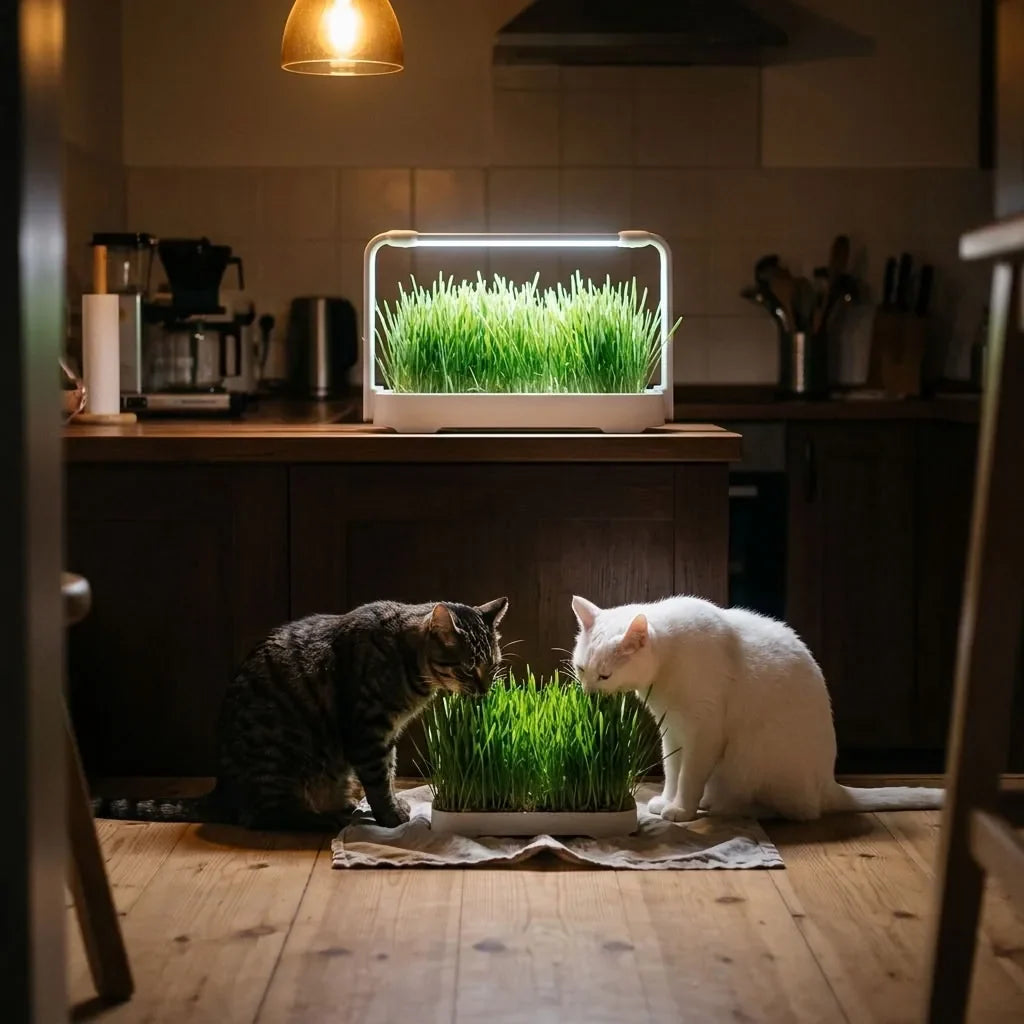
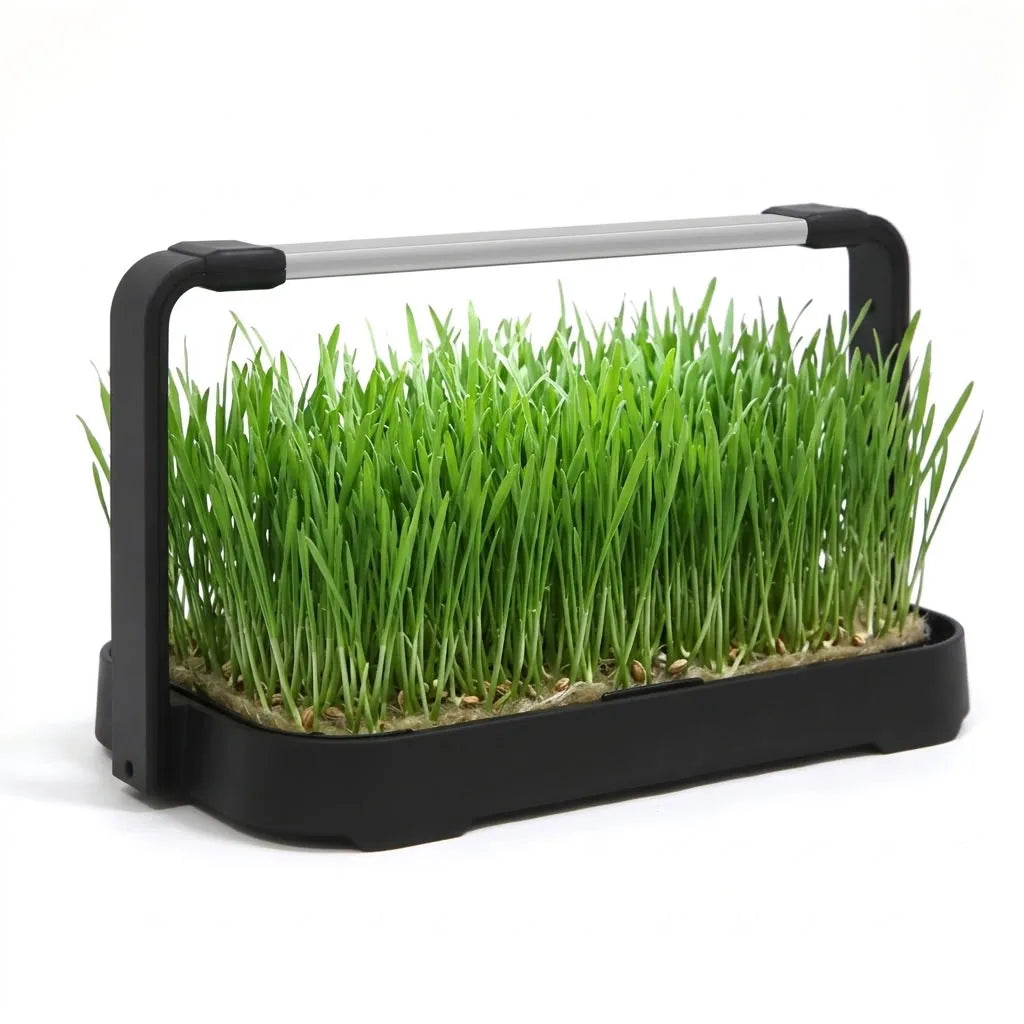
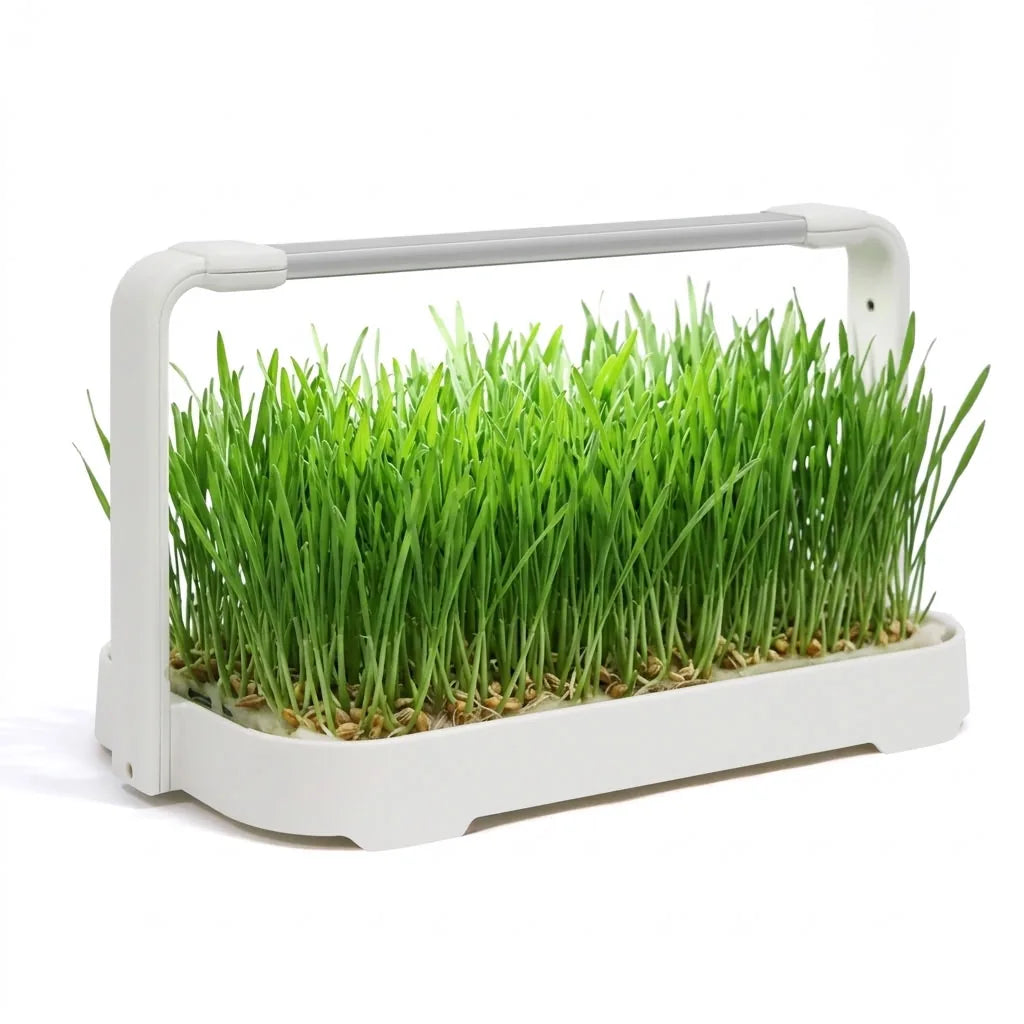
For the grass side, the Cat Grass Growing Kit with LED Light grows wheatgrass on a grow mat with no soil, ready in 7 to 12 days, under a built-in 10W LED, so it fits in any corner. Catnip effects last about 15 to 30 minutes, while a tray of cat grass is there for grazing any time. Our post on wheatgrass for cats shows the full growing method.

A simple way to start is one pot of catnip and one tray of cat grass, then see which your cat prefers.
What Else Do Cat Owners Ask About Catnip and Catmint?
Why does my cat ignore catnip?
Responding to catnip is an inherited trait, according to Fairfax Gardening, so some cats never react. University of Arizona Extension says about two thirds of cats respond. Very young kittens and senior cats are also less likely to react.
Do kittens react to catnip?
Most kittens do not. Catster says catnip is harmless to kittens but most do not react, and cats around 6 months to 1 year are more likely to react than newborns.
Is catmint safe for cats?
We found no source that states whether ornamental catmint is safe for cats to eat. The ASPCA lists catmint as a common name for true catnip, which it says can cause vomiting and diarrhea in some cats. Ask your vet before letting your cat chew garden catmint.
Is fresh catnip stronger than dried?
Yes. Catster says fresh catnip is stronger than dried, so start with a very small amount and wait about 30 minutes before offering more.
Related reading: cat grass for kittens, oat grass for cats and cat enrichment ideas.
Author: Aquager Team · Published: 2026-11-09 · Updated: 2026-11-09



0 comments