
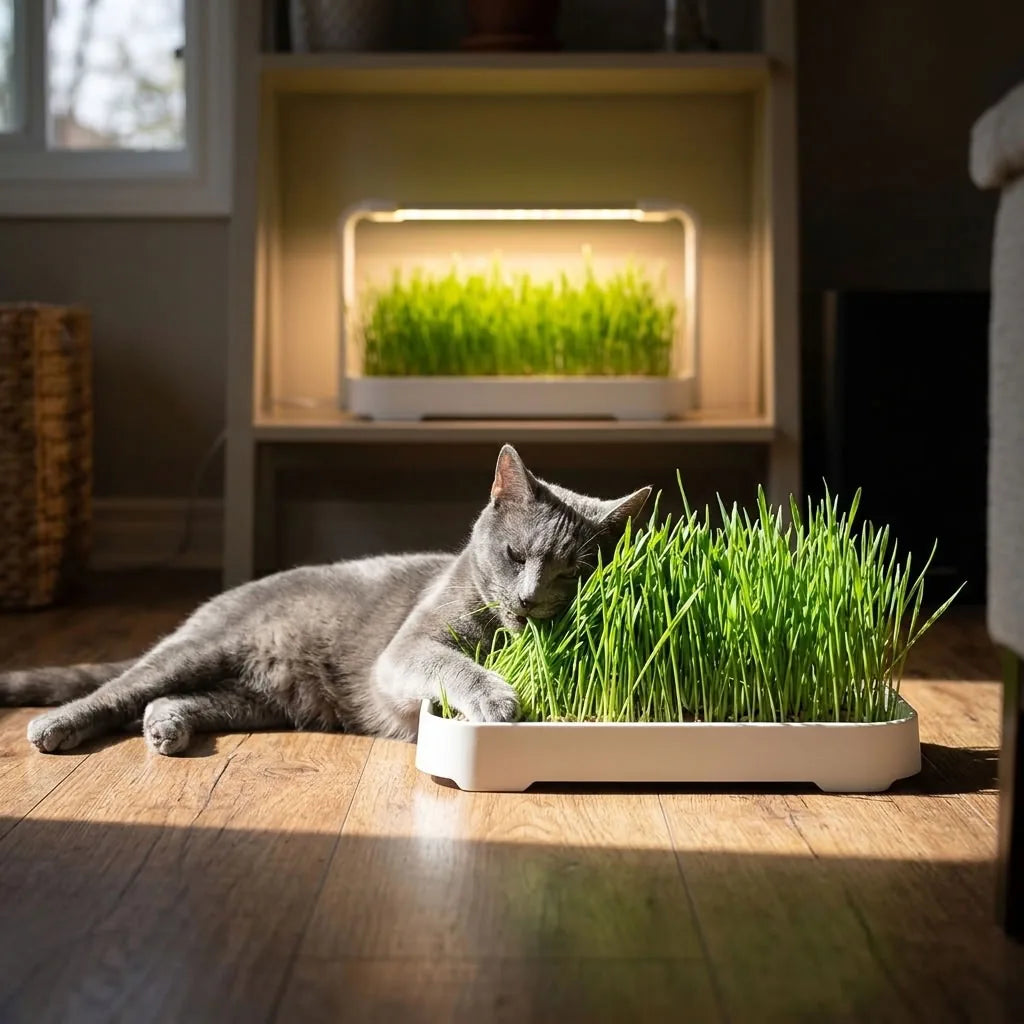
Oat grass for cats and wheatgrass are the two cat grasses owners compare most, and both are young cereal grasses that cats can nibble. They look alike on a seed packet, but they differ in how easy they are to find, how fast they grow and what sources say about them. This guide puts them side by side so you can pick one tray and stop second-guessing.
We also cover barley grass and rye grass, since many seed mixes include them. The goal is simple: help you choose the best cat grass for your indoor cat, with honest notes on what is known and what is not.
One note first: this is general information, not veterinary advice. Ask your vet before you add anything new to your cat's routine, and call them if your cat vomits often.
Oat Grass for Cats vs Wheatgrass: Which Is Better?
Wheatgrass is the easiest pick for most homes, and oat grass is a good second choice. Both are young cereal grasses sold as cat grass, and we found no study showing that one is better for cats. Wheatgrass wins on availability and speed, while oat grass has the better-documented nutrient list.
PetMD and Whisker both describe cat grass as a young cereal grass grown from wheat, oat, barley or rye seed. The table below shows how the four compare, using what those sources say.
| Oat grass | Wheatgrass | Barley grass | Rye grass | |
|---|---|---|---|---|
| Ready to graze | Around 10 days | 7 to 12 days in our kit | Around 10 days | Around 10 days |
| What sources say | High in protein and soluble fiber | A reliable classic, popular for home growing | Grows tall and fast | Durable and flexible |
| Best for | Owners who want a fiber-rich option | Beginners and fast results | Homes with several cats | Cats that lounge while they nibble |
| Our verdict | Good second choice | Our pick | Good in a mix | Optional extra |
Which Cat Grass Is Best for Nutrition and Digestion?
Oat grass has the clearest nutrient story. PetMD lists it as high in protein and soluble fiber, with iron, manganese, zinc and B vitamins, and quotes a veterinarian who calls it a digestive aid. The sources we found give fewer nutrient details for wheatgrass, barley grass and rye grass.
That does not make oat grass the winner. Cat grass is a snack, not a meal, and cats usually only nibble the tops, so a few bites will not change what your cat gets from its food. Pick the grass your cat will actually eat.
If you wonder why cats go for grass at all, our post on why cats eat grass covers the research.

How Long Do Oat Grass and Wheatgrass Take to Grow?
Cat grass sprouts within a few days and is ready to offer at about 10 days, when it is 3 to 4 inches tall, according to PetMD. Wheatgrass in the Cat Grass Growing Kit with LED Light is ready in 7 to 12 days. Oat grass follows a similar timeline, so speed alone rarely decides.
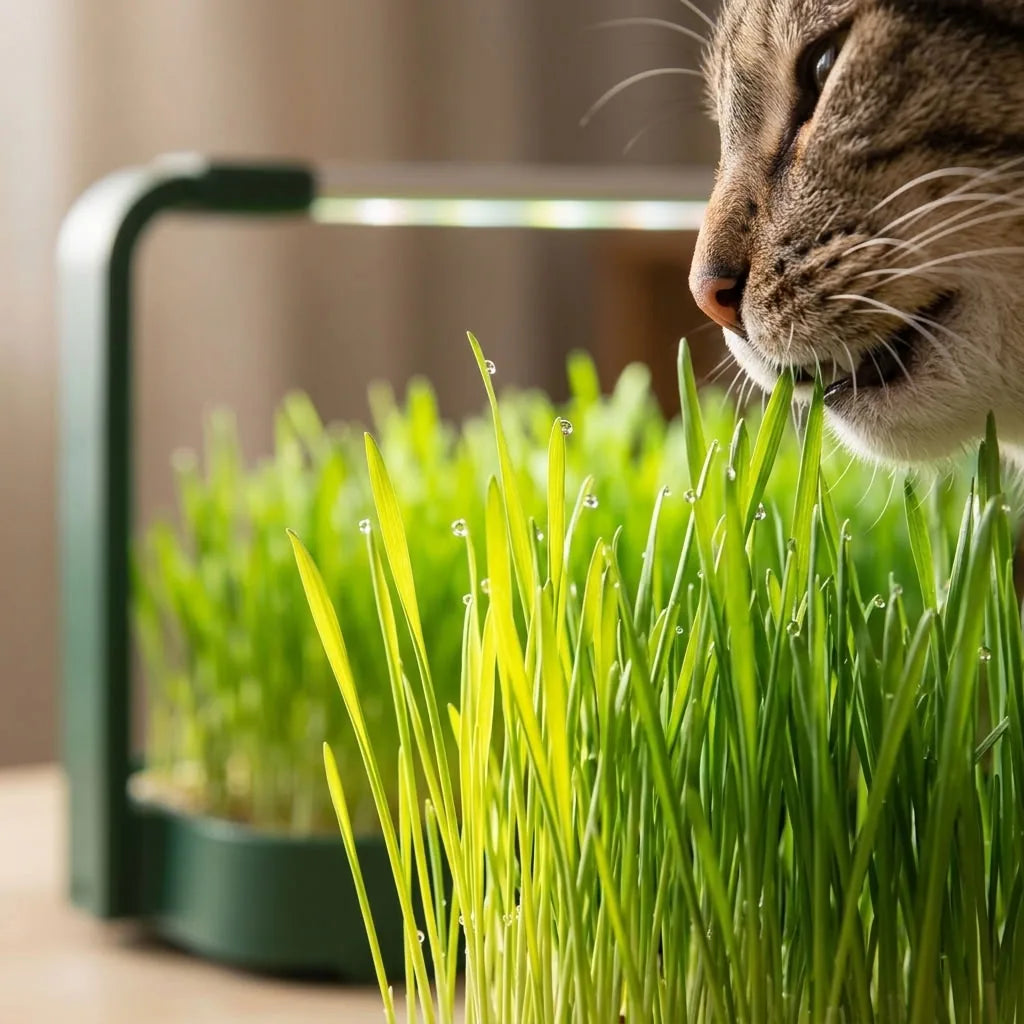
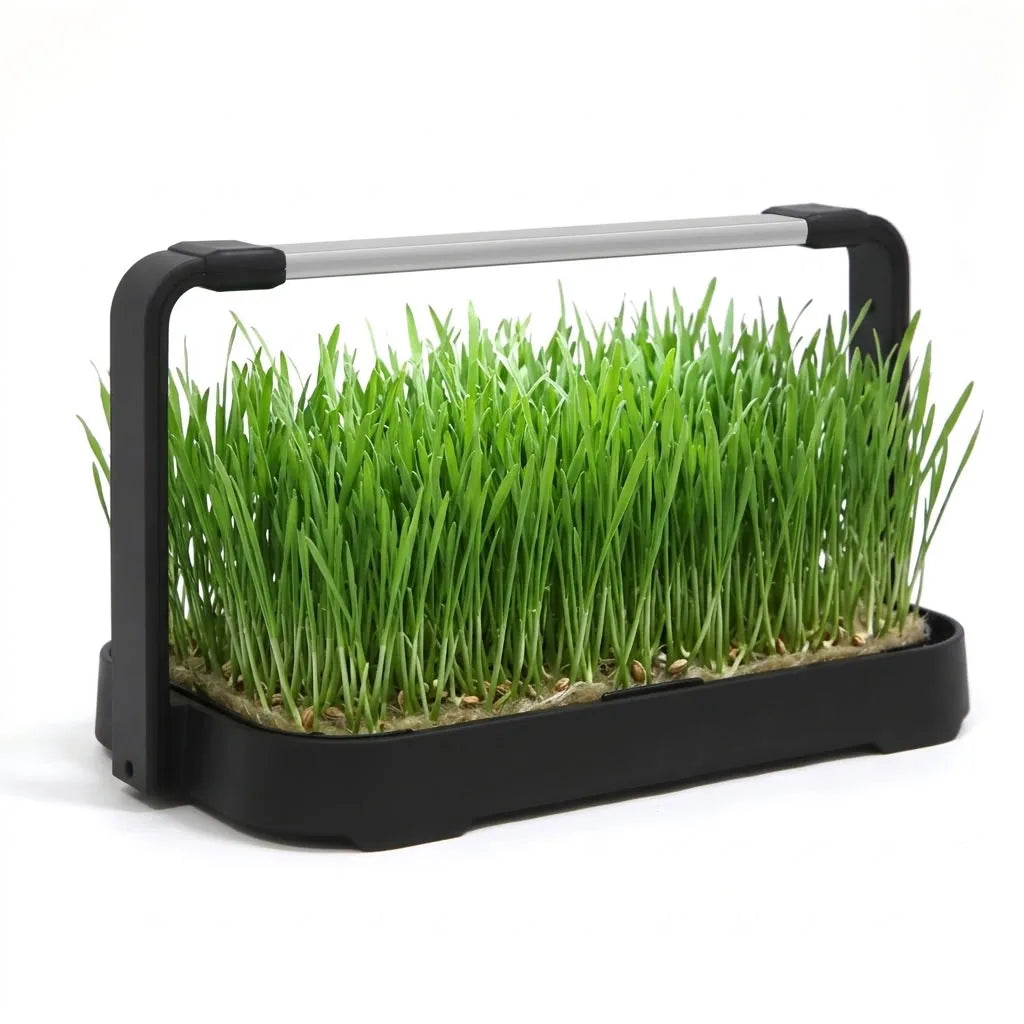
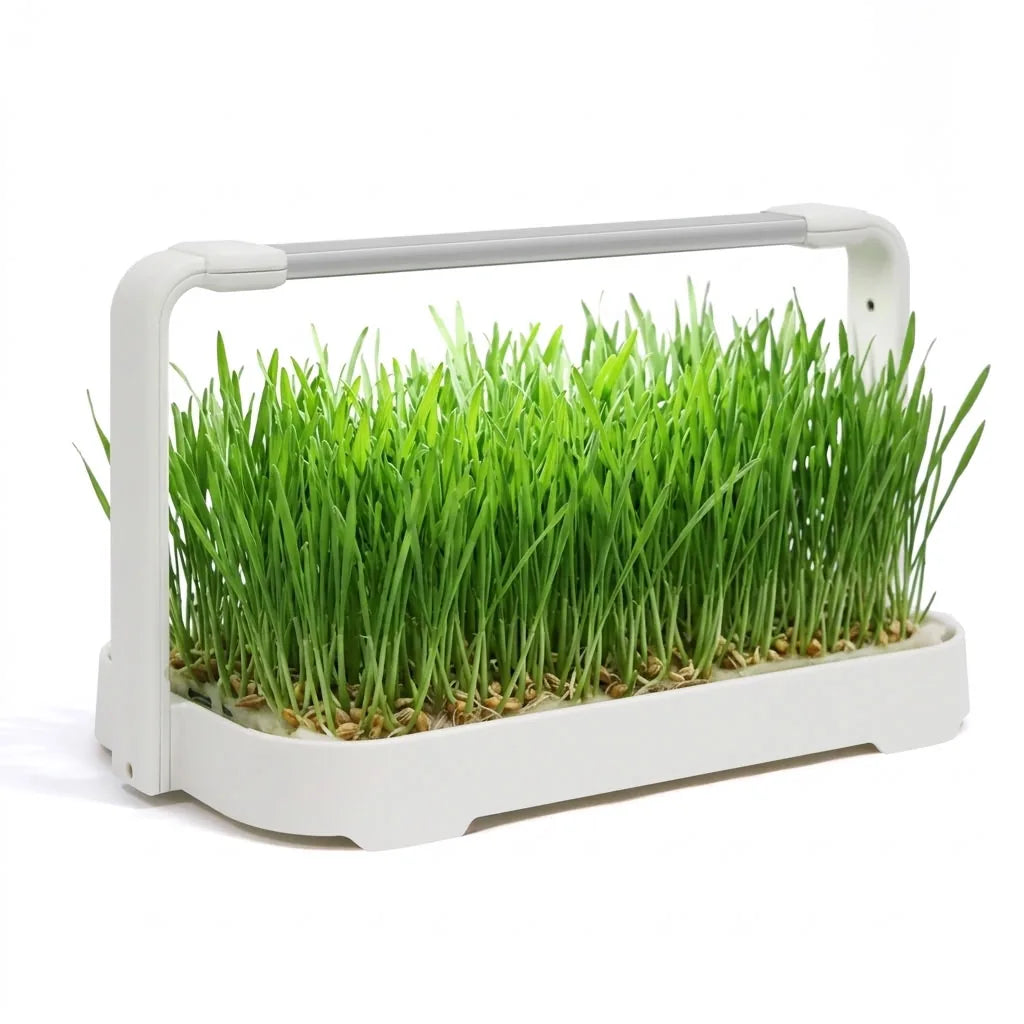
Effort matters more than days. The Cat Grass Growing Kit with LED Light handles the parts that trip people up: a self-watering base, a built-in 10W LED on a timer, 2 packs of USDA-certified organic wheatgrass seed and 2 grow mats. There is no soil to spill and no window needed.
Plan for a second tray, because PetMD says cat grass wilts within a few weeks and suggests starting new pots a week or two apart. It also warns that overwatered grass can grow mold, so start a fresh batch if you see any.

Where Do Barley Grass and Rye Grass for Cats Fit In?
Barley grass and rye grass are also used as cat grass, and many seed mixes include both. Whisker describes barley as growing high and fast, which suits homes with several cats, and rye as durable and flexible. Neither has stronger evidence than wheat or oat, so treat them as options, not upgrades.
Look at the seed label when you shop. Buy seed sold for cat grass or sprouting, and avoid grass from chemically treated lawns, which Chewy's guide also warns against.
If your cat is picky, grow each grass in its own small tray for a week or two. Whichever tray gets nibbled first tells you what to plant next.
Which Cat Grass Fits Your Home and Your Cat?
Match the grass to your home. Start with wheatgrass if your cat is new to grass, add barley grass if you have several cats, and try oat grass if your cat is picky. Chewy's veterinarian-reviewed guide also suggests giving each cat its own patch and keeping the grass low to the ground.
- One cat new to grass should start with wheatgrass, the reliable classic.
- Several cats may do better with barley grass, which Whisker says suits multi-cat homes, plus a separate patch for each cat.
- A picky cat can try oat grass in a small tray next to the wheatgrass.
- A small space works fine, because a low shelf or floor corner is enough for one tray.
How Do You Grow Oat Grass or Wheatgrass at Home?
You can grow either grass in a shallow container in about 10 days. Chewy's veterinarian-reviewed guide suggests planting about a handful of seeds, covering them with soil, keeping the container in a sunny indoor spot and watering regularly. Follow the steps below, and use the same method for wheat, oat, barley or rye seed.
- Choose seed sold for cat grass, not seed from a treated lawn.
- Plant a handful of seeds in a shallow container and cover them with soil.
- Set the container in a sunny indoor spot and water it regularly, or mist it.
- Look for sprouts within a few days.
- Offer the grass when it is 3 to 4 inches tall, around day 10.
- Start a second container a week or two later so fresh grass is always ready.
Do not let the soil stay soggy, because overwatered grass can grow mold. If you would rather skip soil, a grow kit with mats does the same job with less mess.
How Do You Offer Cat Grass to Your Cat for the First Time?
Set a ready tray at floor level where your cat rests and let it explore without pressure. Cats usually only nibble the tops, according to PetMD. Watch the first few sessions for vomiting or diarrhea, which Whisker says can signal overeating, and limit access if needed.
If your cat ignores the first tray, keep it in the same spot for a few days, then try a different grass. Moving the tray away from toxic houseplants helps too, since your cat should have only one green thing to chew.
Is Oat Grass for Cats Safe, and What Should You Watch For?
Indoor-grown cat grass is generally considered safe. Chewy's veterinarian-reviewed guide says grass eating is generally harmless and advises calling a vet if your cat vomits more than twice a month. Avoid grass from treated lawns, and keep toxic plants out of reach.
A few simple habits keep grazing safe:
- Give each cat its own patch in a home with several cats, as Chewy's guide suggests.
- Keep toxic plants away, because PetMD notes that indoor cats may not tell cat grass from poisonous plants.
- Call your vet if your cat eats grass constantly or if the tray is gone within a week or two.
- Throw out any tray that smells musty or shows mold.
Our lists of house plants safe for cats and plants toxic to cats show which plants are safe, and the post on cat eating plants explains why cats chew your houseplants.
What Is the Best Cat Grass for Indoor Cats?
Wheatgrass is the best cat grass for most indoor cats because the seed is easy to find, it is ready fast and a kit keeps it simple. If your cat ignores it, try oat grass next. There is no proof that one grass is better, so let your cat vote with its appetite.
Wheat berry is a popular choice for home growing, as Chewy's guide notes, and it is the grass in our kit. If you want the full guide, read our post on wheatgrass for cats. To compare grass with catnip, see cat grass vs catnip.
Our pick is the Cat Grass Growing Kit with LED Light, which grows a tray of wheatgrass in 7 to 12 days. Start one tray, watch what your cat does, and try oat grass later if you want variety.

What Else Do Cat Owners Ask About Oat Grass and Wheatgrass?
Is oat grass or wheatgrass better for cats?
We found no study showing that either is better. Oat grass is higher in protein and soluble fiber, while wheatgrass is easier to find and quick to grow, so many owners start with wheatgrass.
Can I mix oat grass and wheatgrass?
Yes. Many cat grass seed mixes combine wheat, oat, barley and rye, and Whisker notes that each can also be grown on its own.
How tall should cat grass be before my cat eats it?
PetMD says cat grass is ready to offer at about 3 to 4 inches tall, usually around 10 days after planting.
Do I need soil to grow cat grass?
Many guides use soil, but you can also grow cat grass on grow mats. Our kit uses grow mats with a self-watering base, so there is no soil to spill.
How long does cat grass last?
PetMD says it typically wilts within a few weeks, so start a new pot a week or two after the first.
Related reading: cat grass for kittens, cat grass mold and catnip vs catmint.
Author: Aquager Team · Published: 2026-11-09 · Updated: 2026-11-09



0 comments